
Blog
Everything B2B teams need to know about leveraging creators as a growth channel













Search all articles…

Podcast Creator Partnerships in B2B: How to Turn Niche Trust Into Pipeline

Jun 29, 2026

5 min. read

Newsletter Creator Partnerships for B2B: When Inbox Trust Beats Feed Reach
Jun 26, 2026
5 min. read

The B2B Creator Audience Fit Scorecard: How to Vet Influence Before You Pay
Jun 25, 2026
5-6 min. read

Why Technical Founders Should Partner With Practitioners, Not Generic Influencers
Jun 24, 2026
5-6 min. read

How Creator Partnerships Create Dark Social Demand B2B Teams Can Actually Measure
Jun 23, 2026
6-7 min. read

How to Use B2B Creators for Product Launches Without Turning Them Into Ads
Jun 22, 2026
5-6 min. reaad

What to Analyze After a B2B Creator Campaign Ends
Jun 18, 2026
3-4 min. read
Why Small B2B Creators Often Beat Bigger Influencers on Pipeline
Jun 17, 2026
5 min.
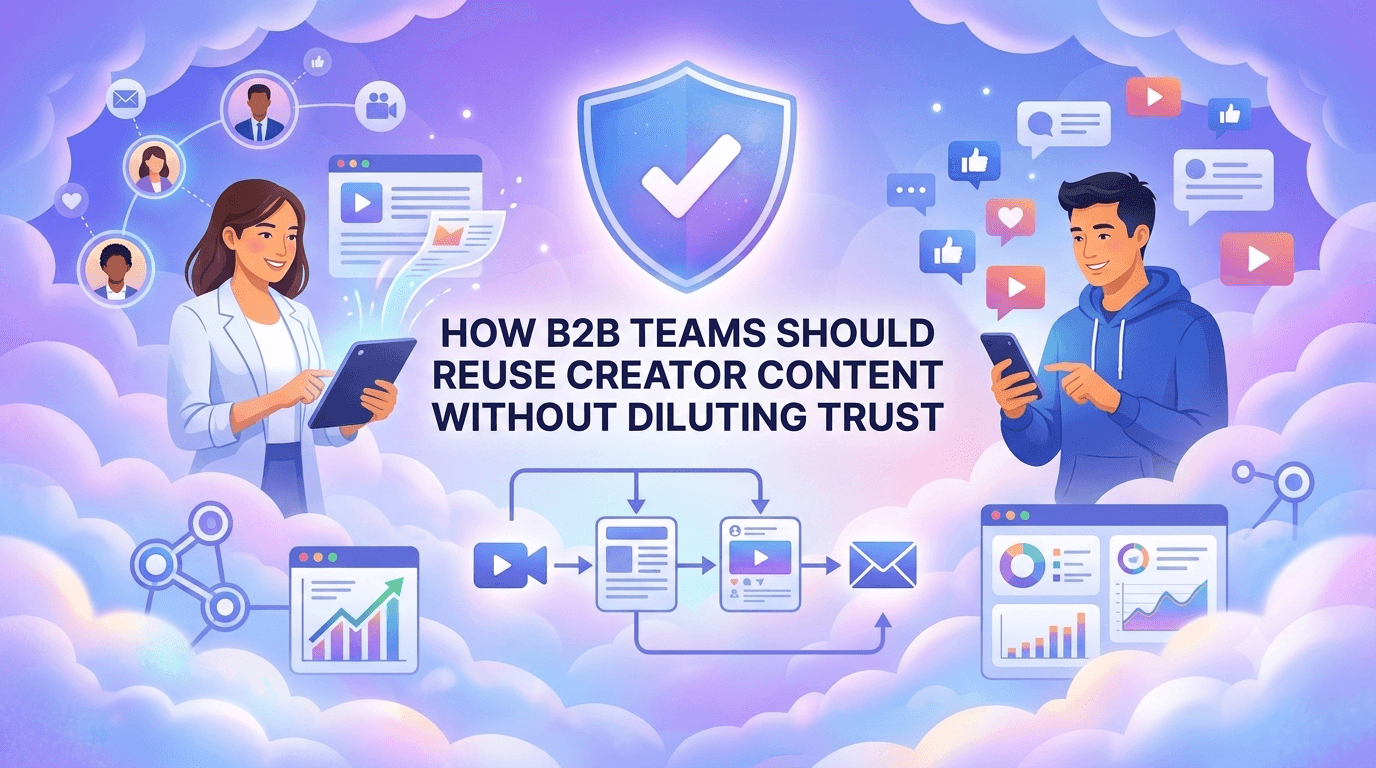
How B2B Teams Should Reuse Creator Content Without Diluting Trust
Jun 12, 2026
4 min. read

Founder-Led Creator Partnerships: Why Executive Trust Still Matters in B2B
Jun 10, 2026
4 min. read

How to Build a Creator Market Map for Your B2B Category
Jun 9, 2026
4-5 min. read
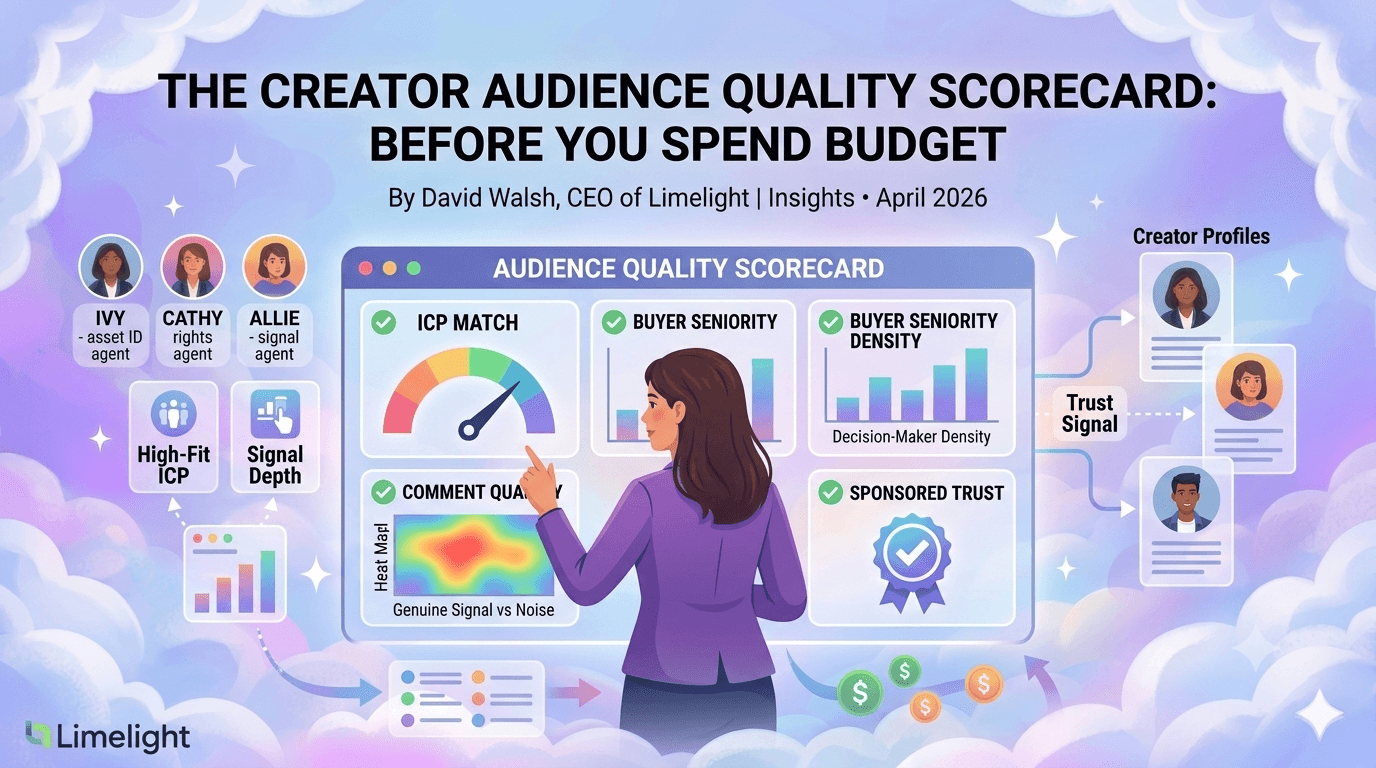
How to Score Creator Audience Quality Before You Spend Budget
Jun 8, 2026
4 min. read

The Creator Program Operating System B2B Teams Need Before They Scale
Jun 5, 2026
5 min. read

How Sales Teams Should Follow Up on Creator Engagement Signals
Jun 4, 2026
5 min. read

How to Write B2B Creator Briefs That Produce Useful Content
Jun 3, 2026
4 min. read

Creator-Led Demand Generation: How B2B Teams Turn Trust Into Qualified Pipeline
Jun 2, 2026
4-5 min. read
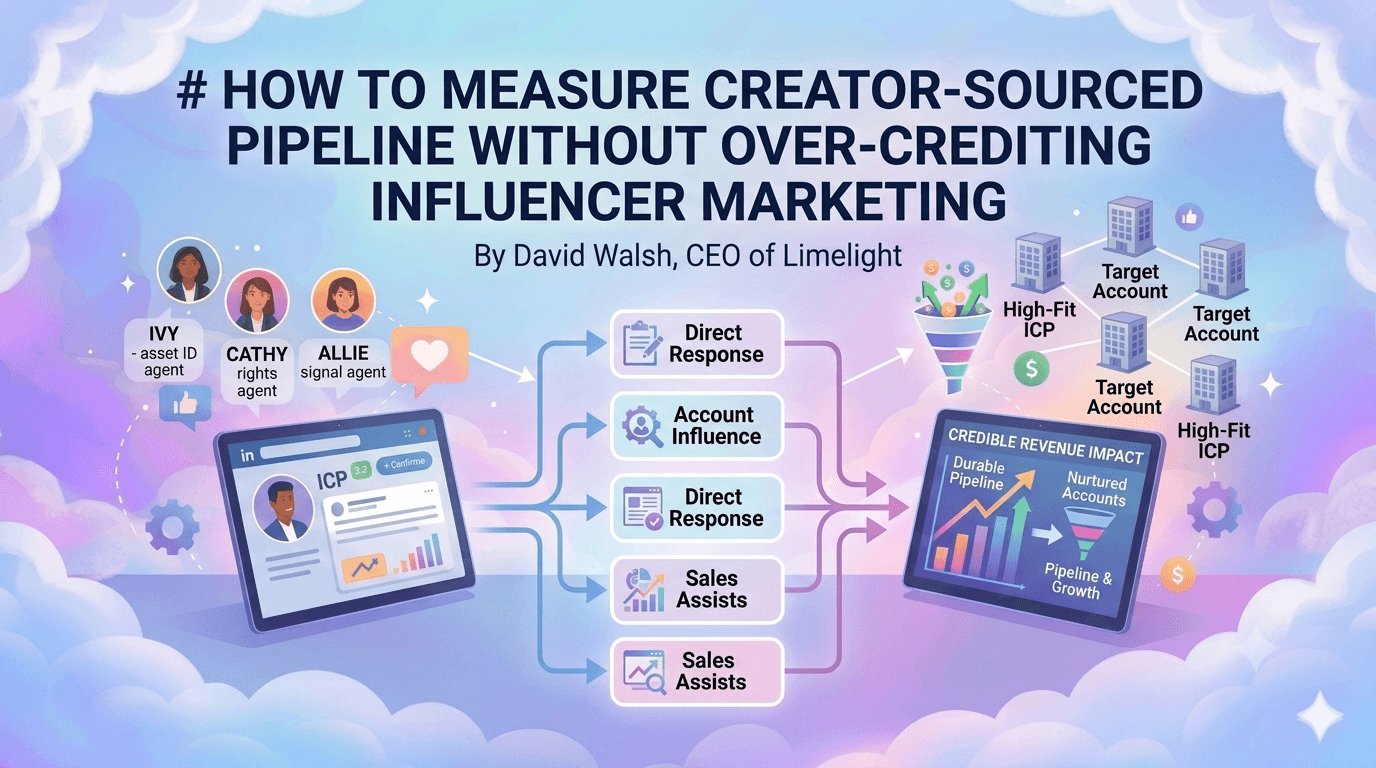
How to Measure Creator-Sourced Pipeline Without Over-Crediting Influencer Marketing
Jun 2, 2026
4 min. read
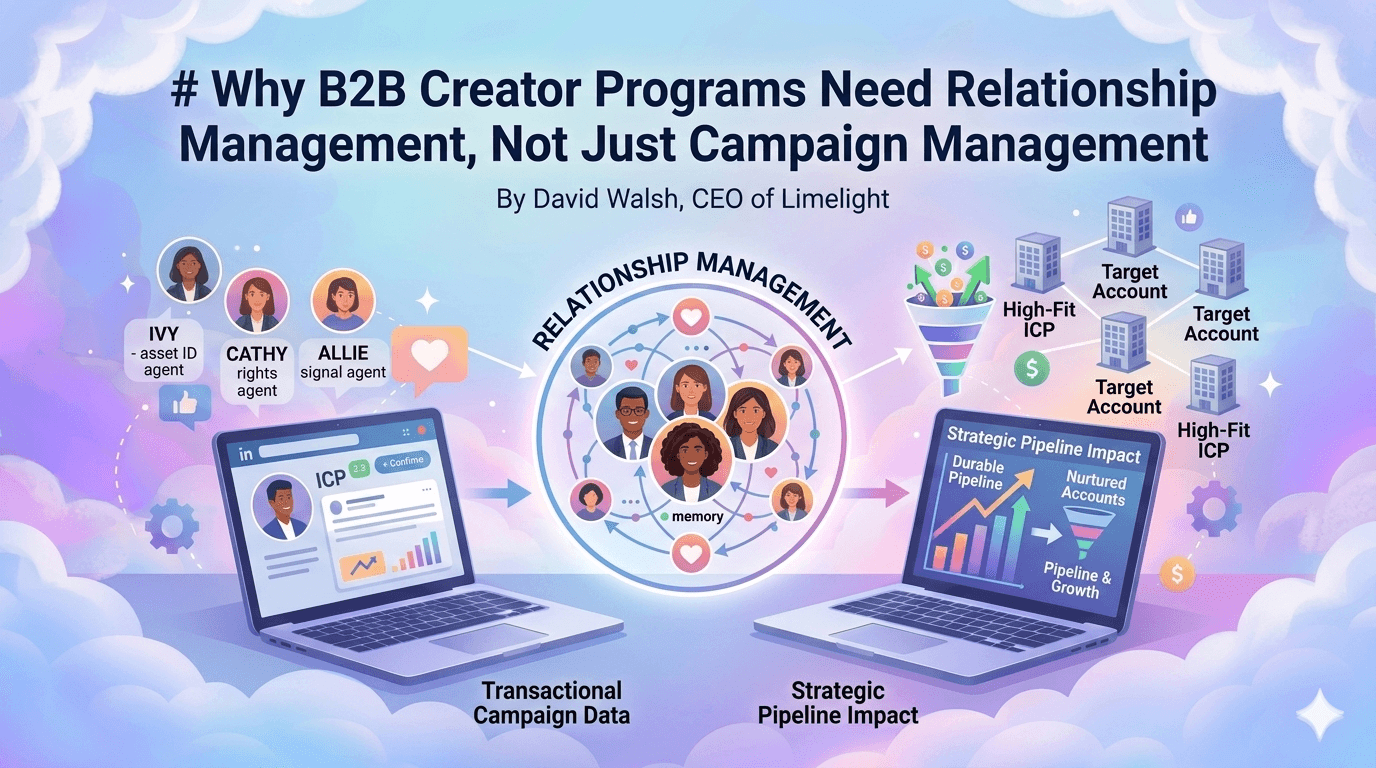
Why B2B Creator Programs Need Relationship Management, Not Just Campaign Management
May 29, 2026
4 min. read
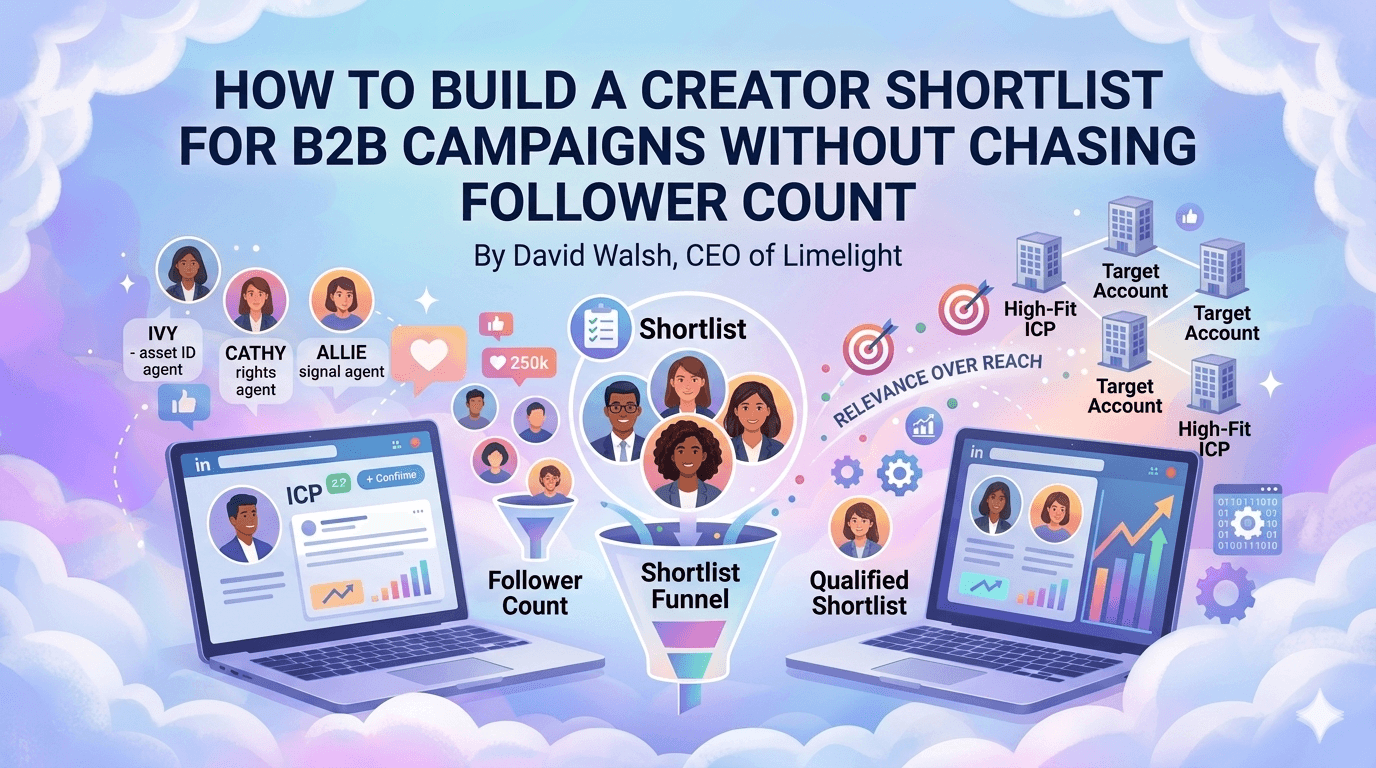
How to Build a Creator Shortlist for B2B Campaigns Without Chasing Follower Count
May 28, 2026
5-6 min. read
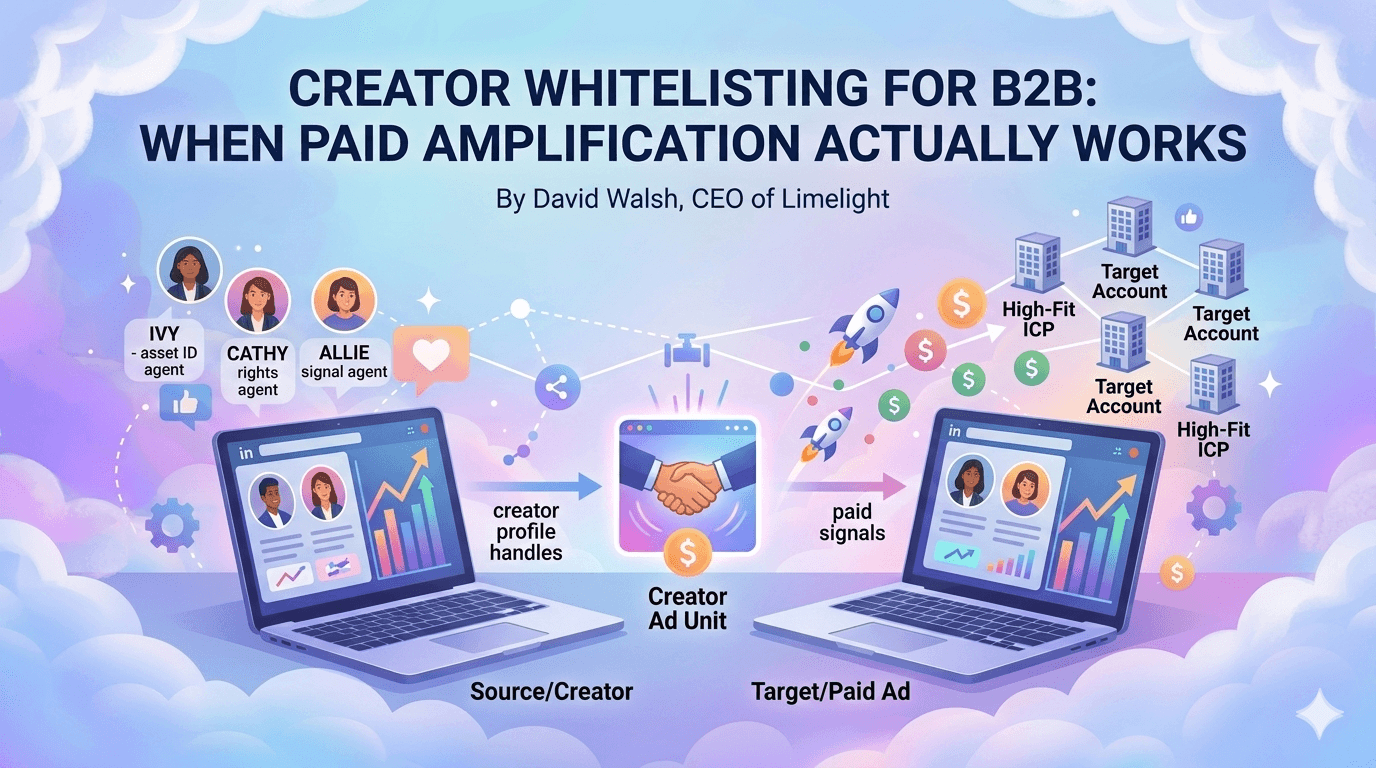
Creator Whitelisting for B2B: When Paid Amplification Actually Works
May 27, 2026
5 min. read
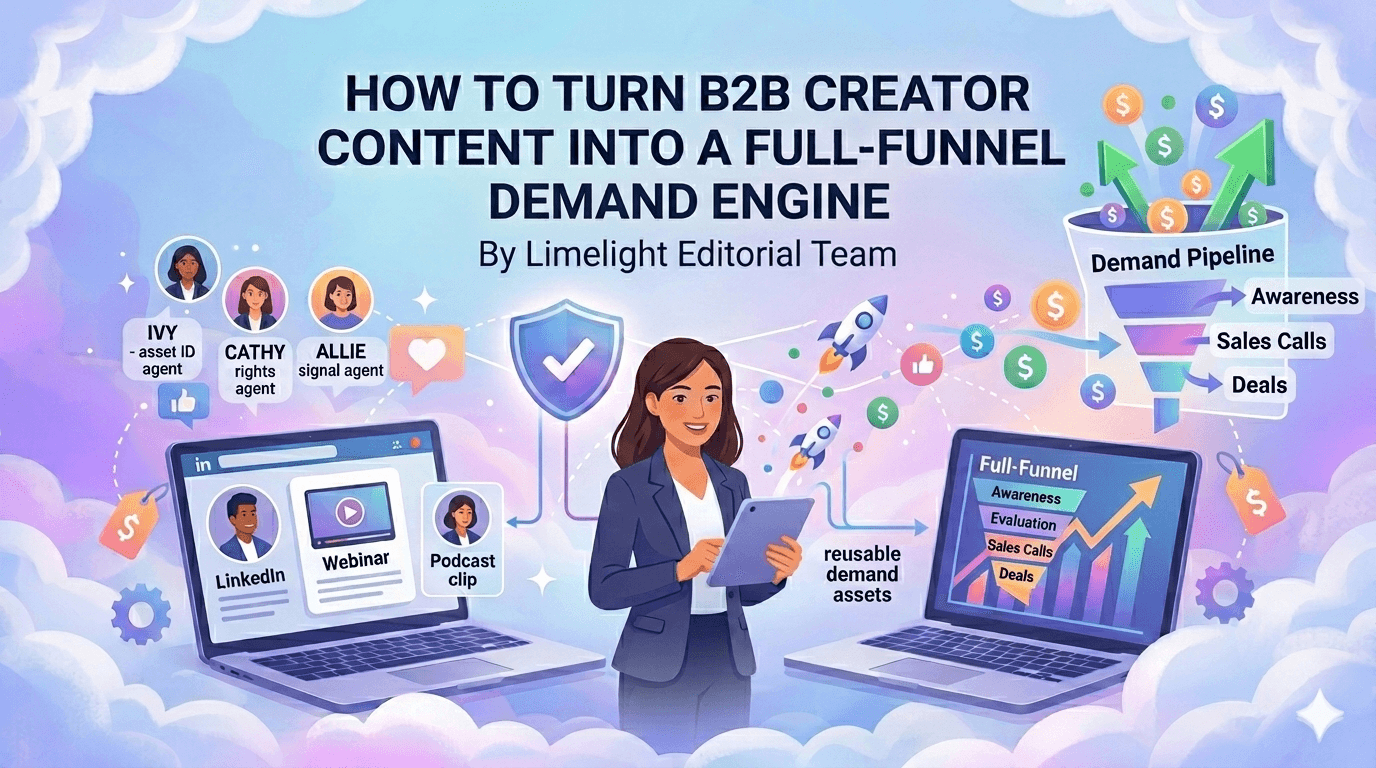
Beyond the Post: Turning B2B Creator Content Into a Full-Funnel Demand Engine
May 26, 2026
8 min. read
AI-Powered Influencer Marketing in 2026: How Artificial Intelligence Is Transforming Creator Partnerships
May 22, 2026
8-10 min. reaad
LinkedIn B2B Creator Marketing: The Definitive Guide to Partnering with Thought Leaders
May 21, 2026
10 min. read
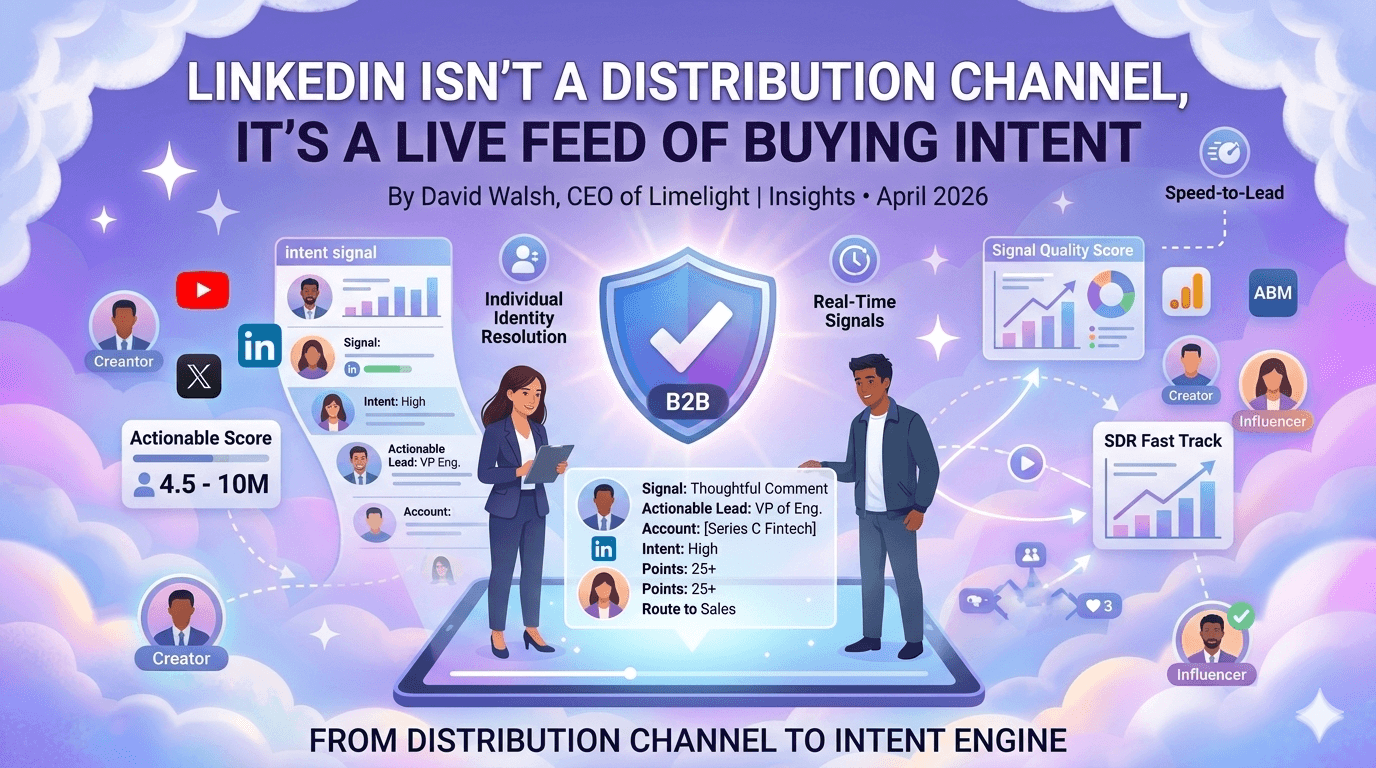
LinkedIn Isn't a Distribution Channel, It's a Live Feed of Buying Intent
May 20, 2026
6 min. read
B2B Creator Partnership Economics: Pricing Models, ROI Benchmarks, and Budget Frameworks
May 19, 2026
7-8 mins. reaad
Employee Advocacy as a B2B Creator Strategy: Why Your Best Creators Already Work for You
May 18, 2026
6 min. read
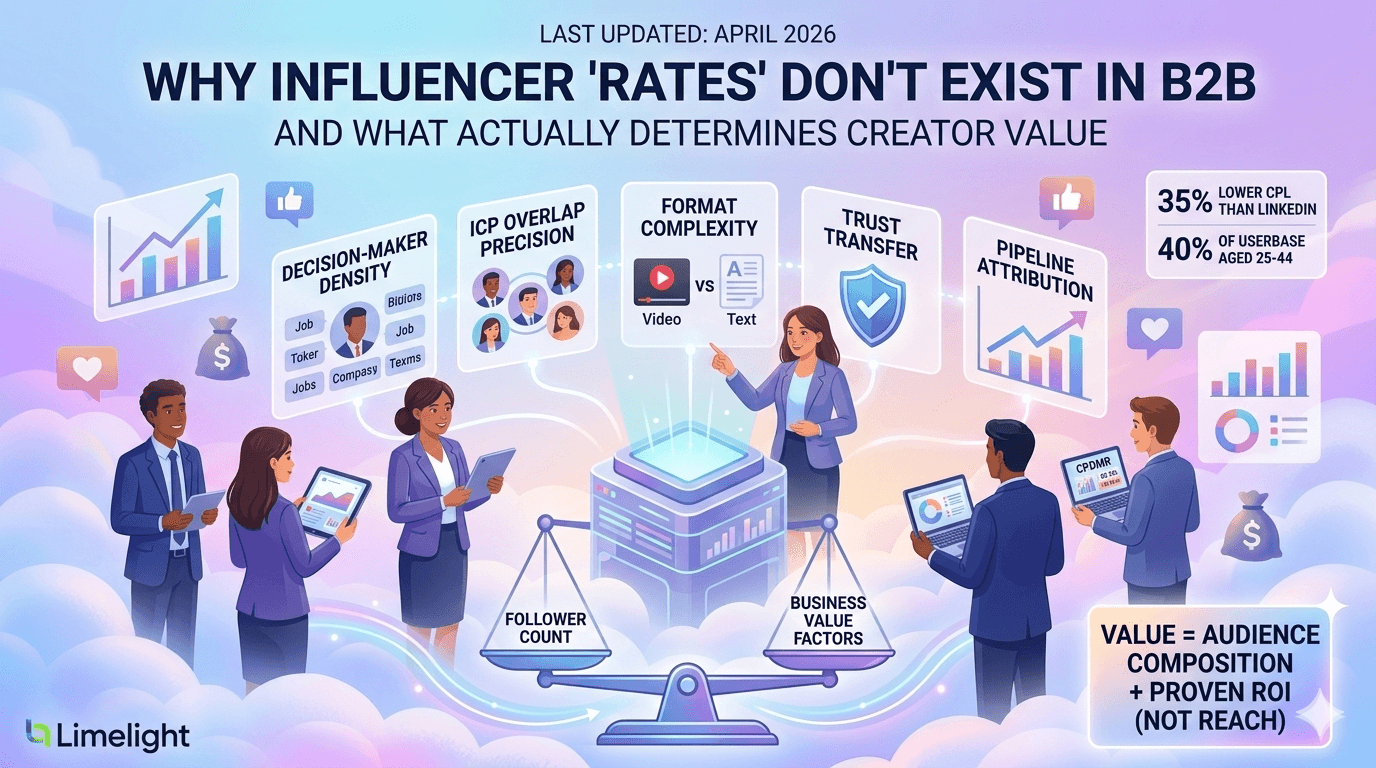
Why Influencer "Rates" Don't Exist in B2B (And What Actually Determines Creator Value)
May 15, 2026
6-min read
What an Influencer’s Past Partnerships Reveal About Your Next Deal
May 14, 2026
6-8 min read
Influencer Marketing Metrics and ROI: The Complete B2B Measurement Framework for 2026
May 13, 2026
10-12 min read
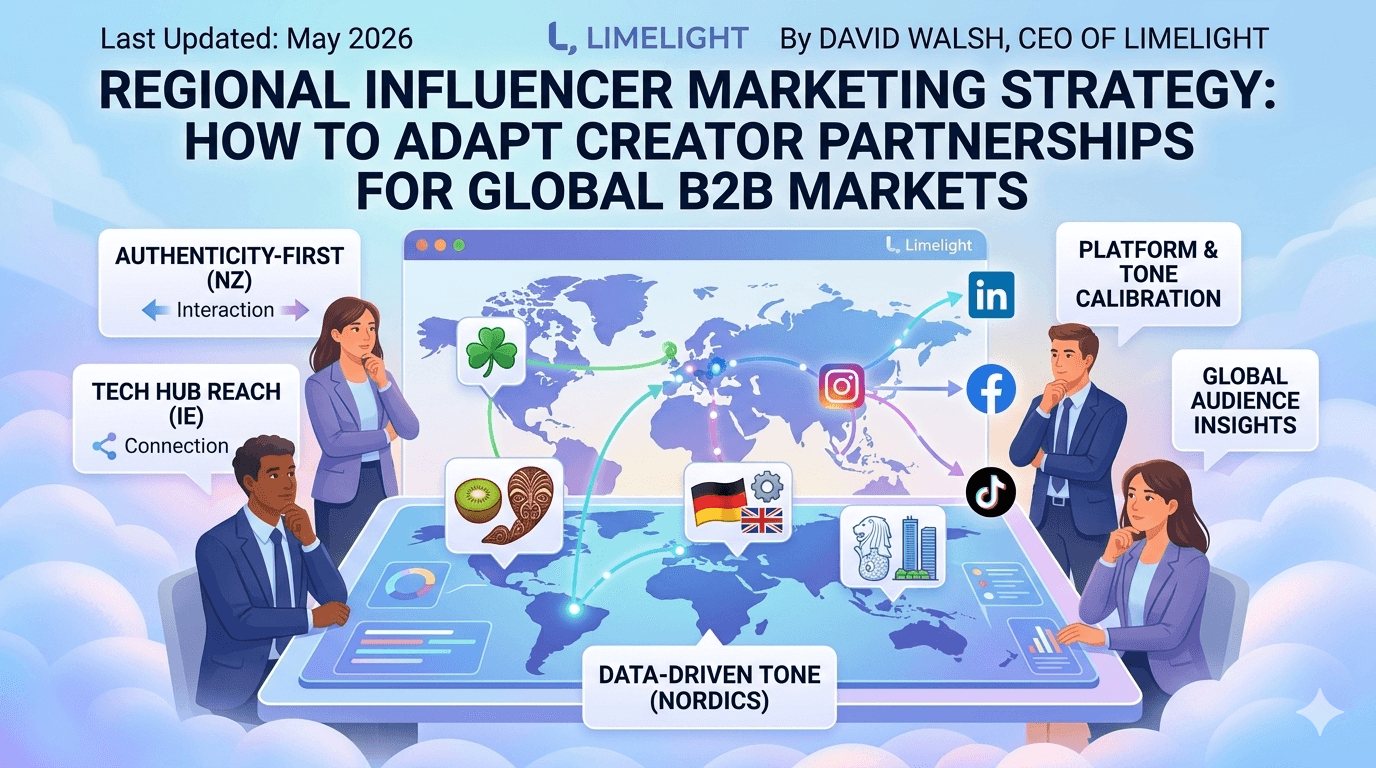
Regional Influencer Marketing Strategy: How to Adapt Creator Partnerships for Global B2B Markets
May 12, 2026
4 min read
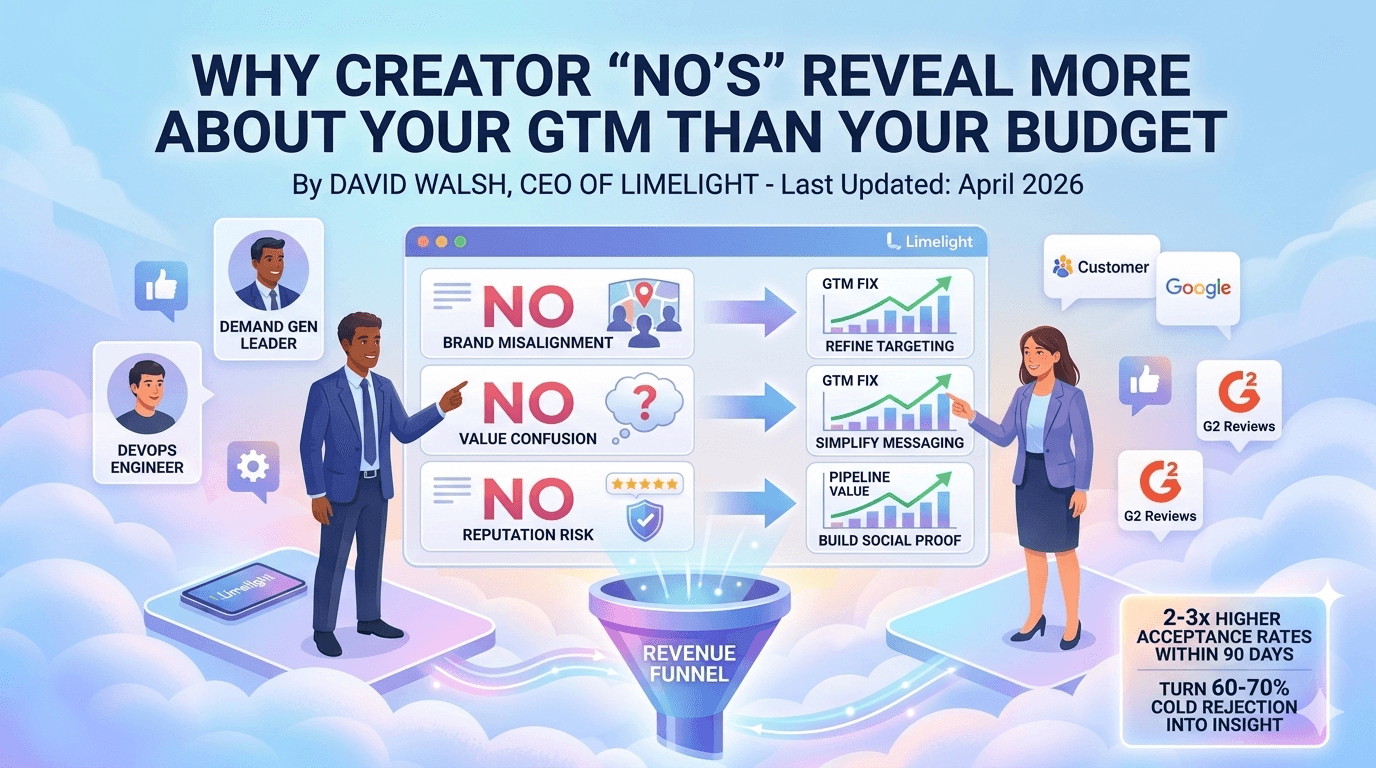
Why Creator "No's" Reveal More About Your GTM Than Your Budget
May 11, 2026
5-6 min read
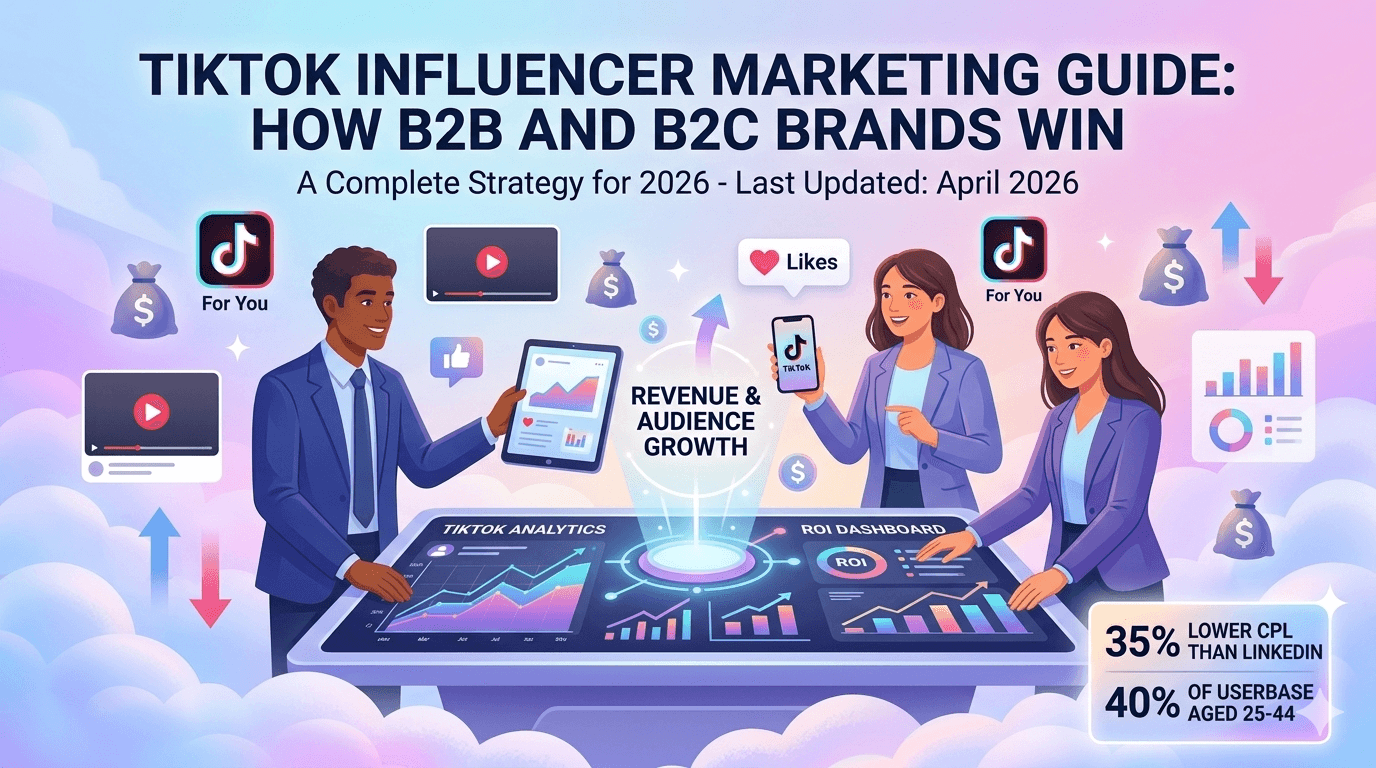
TikTok Influencer Marketing Guide: How B2B and B2C Brands Win on the Fastest-Growing Platform
May 8, 2026
6 min read
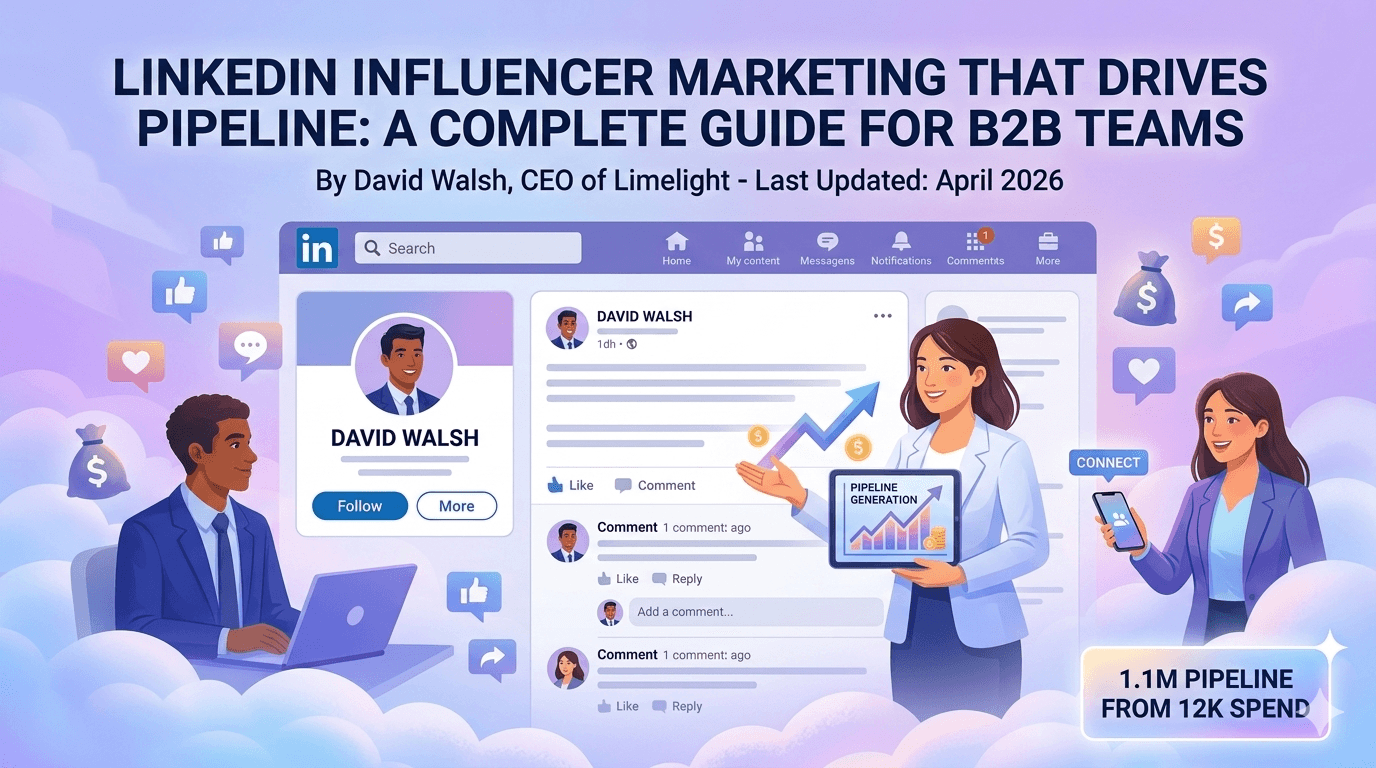
LinkedIn Influencer Marketing That Drives Pipeline: A Complete Guide for B2B Teams
May 7, 2026
7 min read
YouTube Influencer Marketing: The Complete B2B and B2C Strategy for 2026
May 6, 2026
4 min read
Structuring B2B Creator Partnerships That Actually Move Revenue
May 6, 2026
6 min read
Vectorizing Trust: How Creator Signals Become Revenue Triggers in B2B
May 4, 2026
5-6 min read
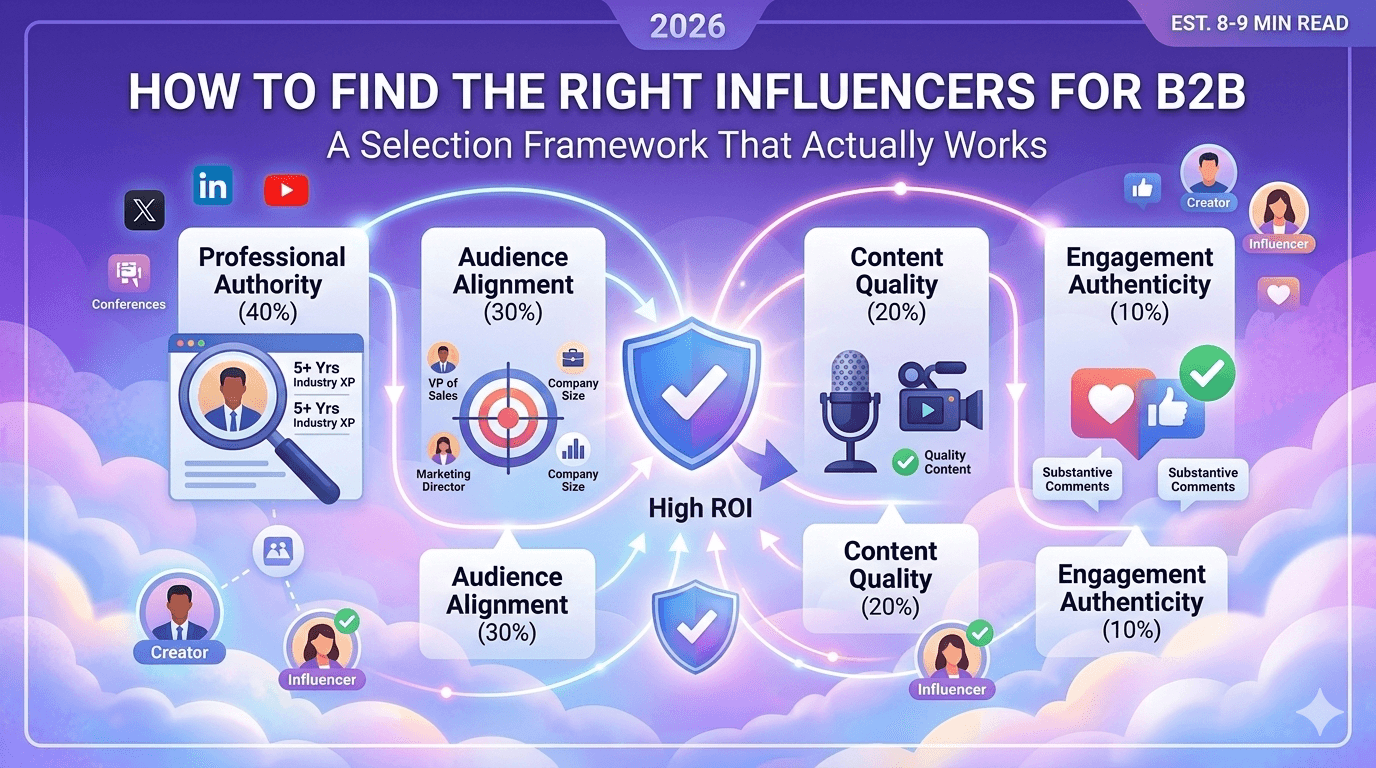
How to Find the Right Influencers for B2B: A Selection Framework That Actually Works
Apr 30, 2026
8-9 min read
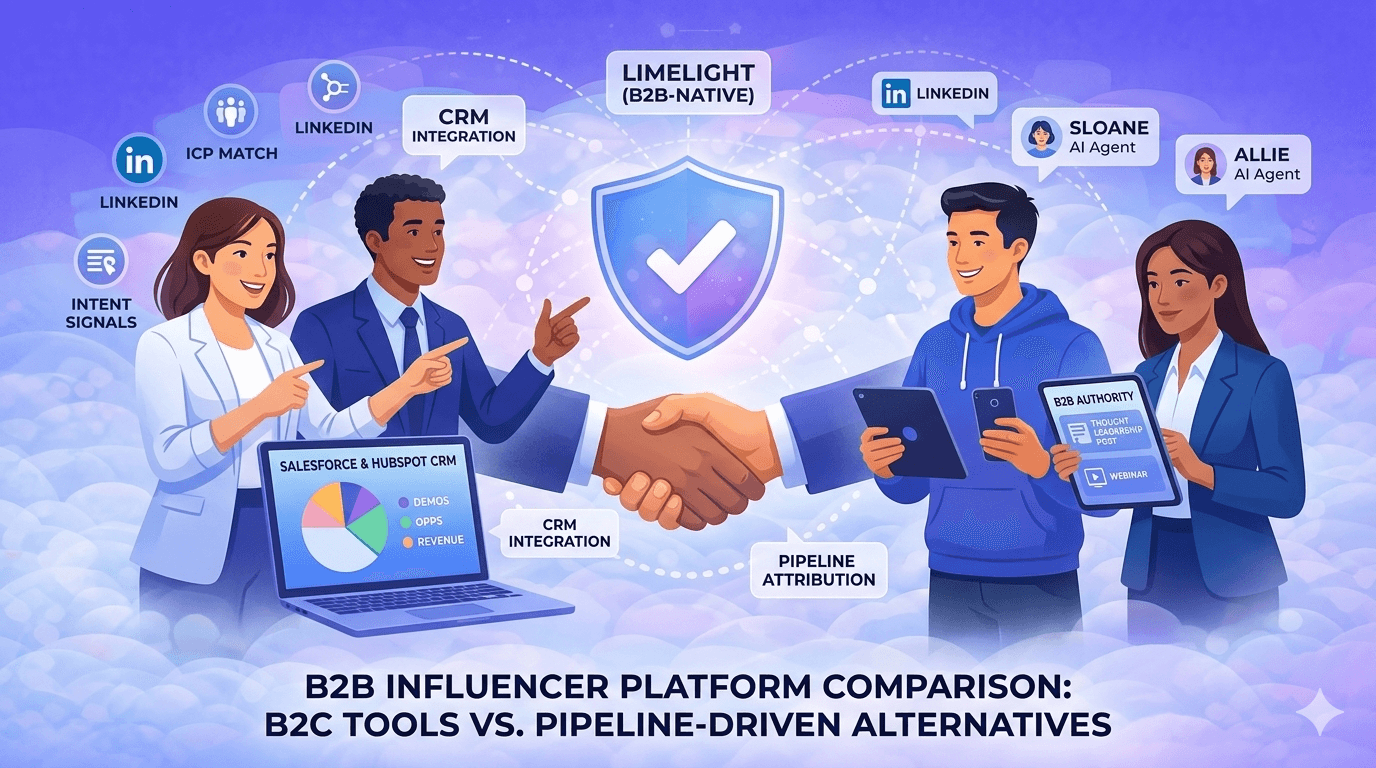
Influencer Marketing Platform Alternatives Compared: Which One Actually Works for B2B?
Apr 29, 2026
6 min read
Why B2B Influencer Marketing Drives Revenue, Not Just Awareness
Apr 28, 2026
5 min read
March Madness Influencer Marketing: How Brands Win During the Tournament (and What B2B Can Learn)
Apr 27, 2026
7-9 min read
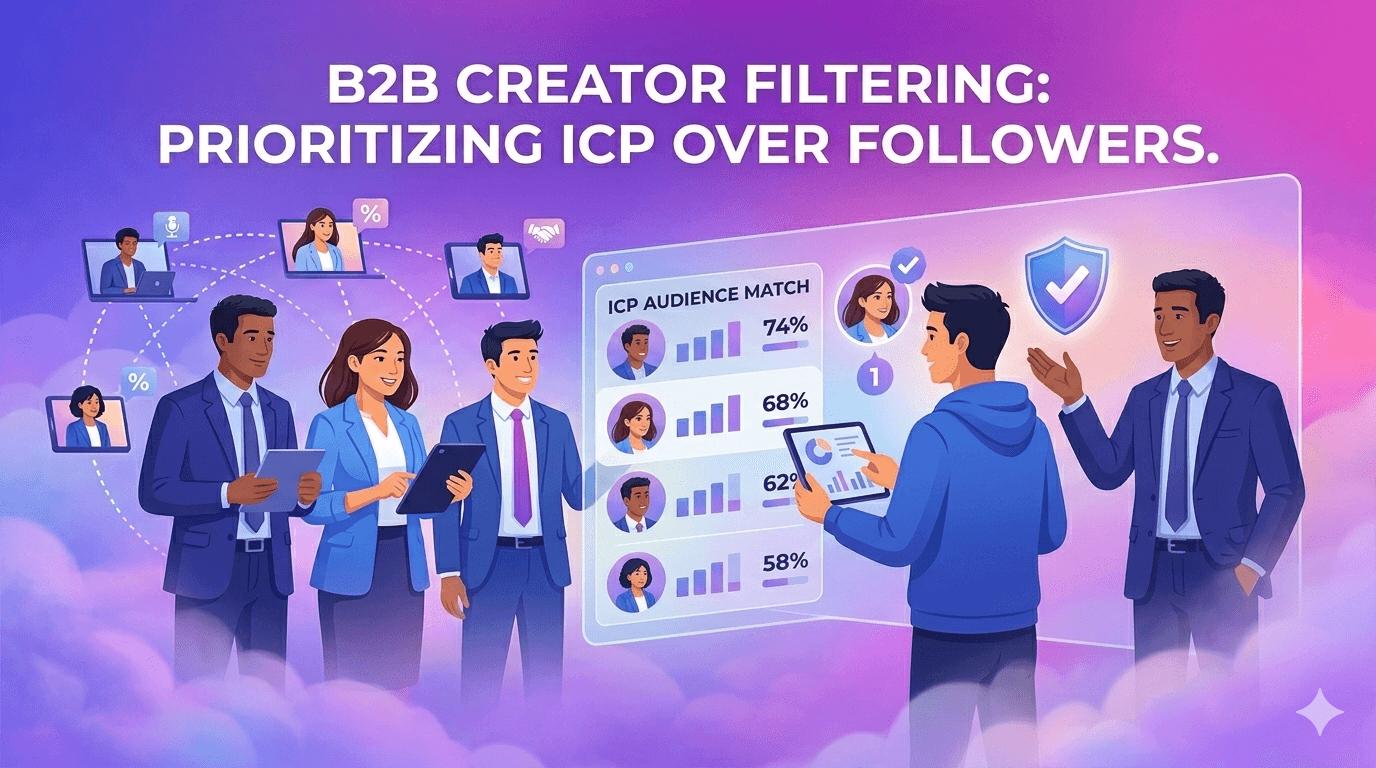
How to Find B2B Creators Who Actually Influence Buyers
Apr 24, 2026
6 min reaad
Best Influencer Marketing Campaigns of 2026: Why B2B Is the New Frontier
Apr 23, 2026
7-9 min read
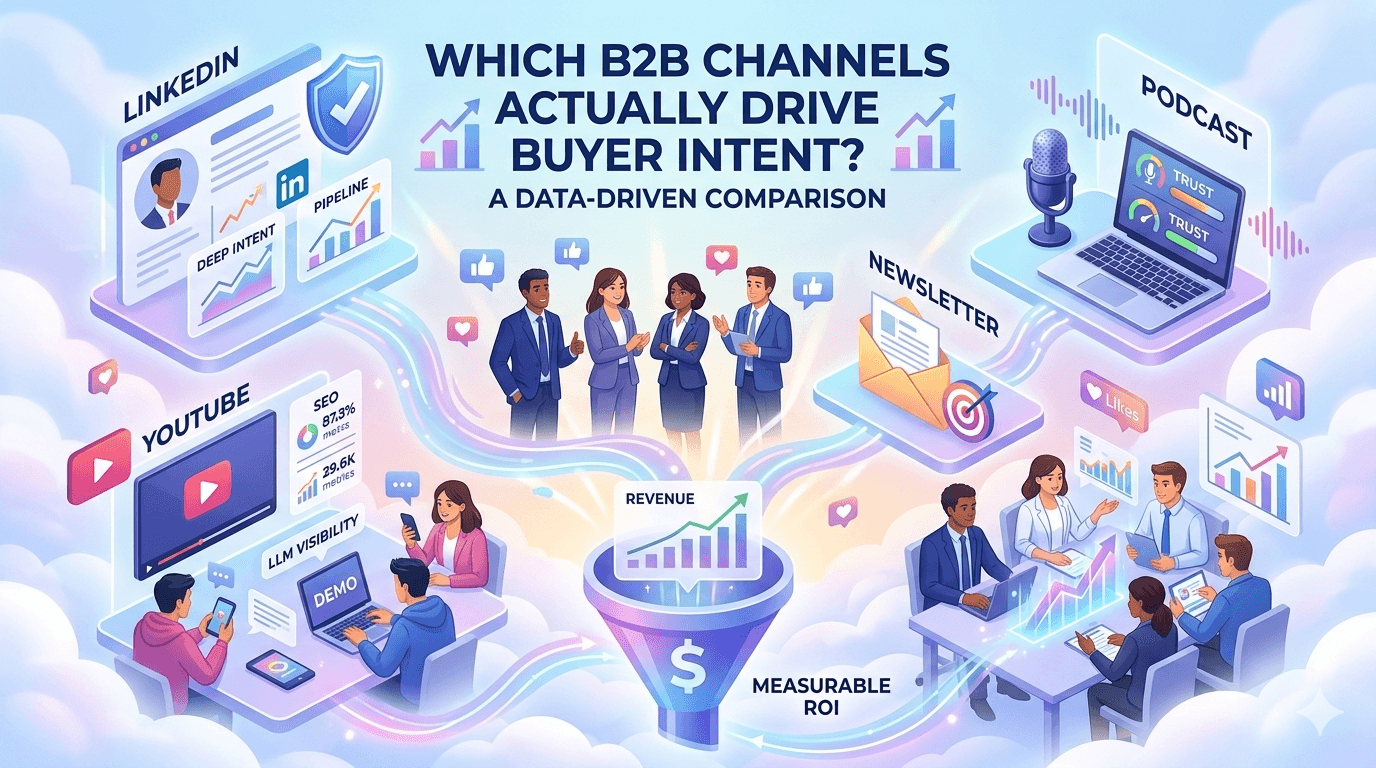
Which B2B Channels Actually Drive Buyer Intent? A Data-Driven Comparison
Apr 22, 2026
5 min read
The Real Future of Influencer Marketing Is Signal Capture, Not Reach
Apr 21, 2026
5 to 7 min read
The 2026 B2B Creator Toolkit: From Content Creation to Pipeline Generation
Apr 20, 2026
12 min read
How B2B Teams Turn Creators Into Pipeline, Not Just Influence
Apr 17, 2026
7 min read
B2B Influencer Marketing: Building Creator Partnerships for the Pipeline Era
Apr 16, 2026
9 min read
The 2026 B2B Buyer’s Guide to Influencer Marketing Platforms
Apr 15, 2026
10 min read
B2B Influencer Marketing for Growth-Stage Companies: Turning Creator Trust Into Pipeline
Apr 14, 2026
8 min read
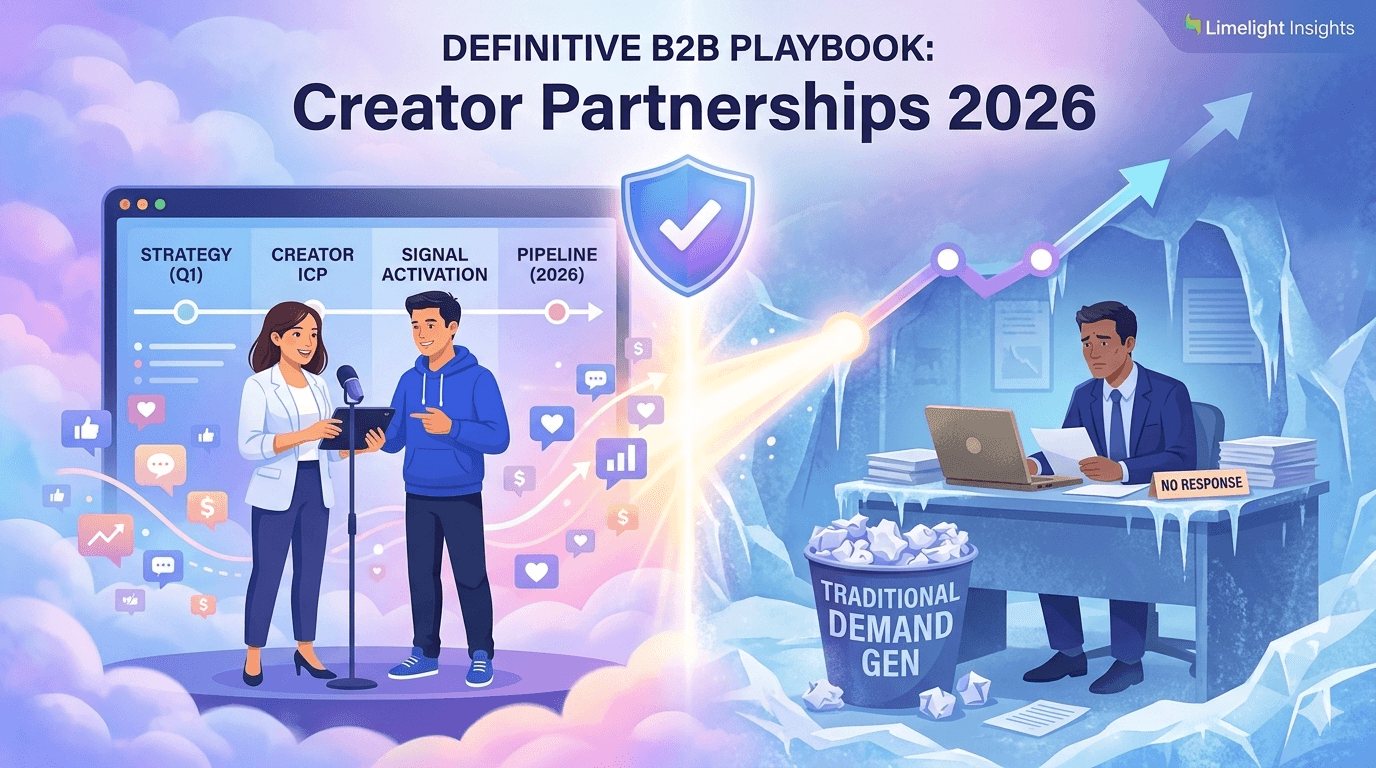
The Definitive B2B Playbook: Influencer Marketing in 2026
Apr 13, 2026
10 min read
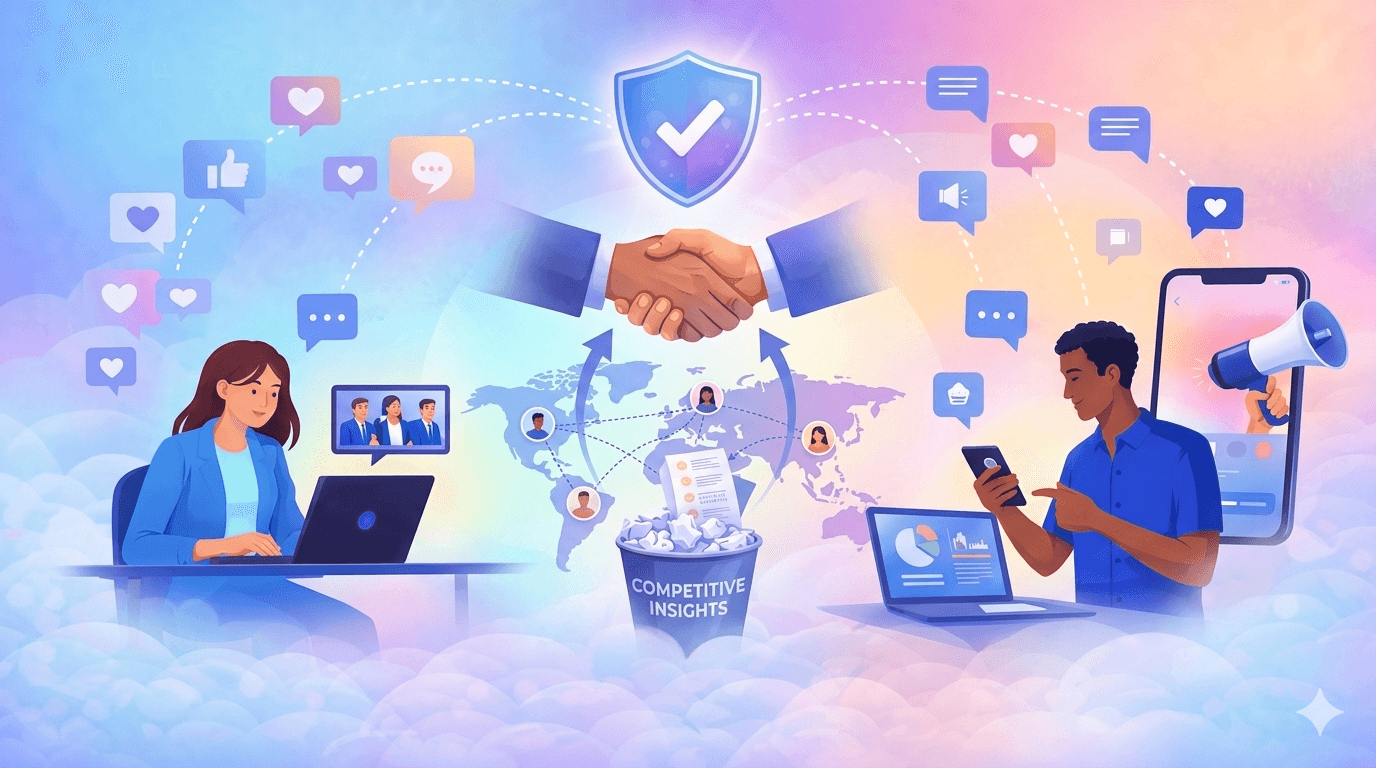
Competitive Creator Intelligence: How to Turn Rival Partnerships Into Early-Win Signals
Apr 10, 2026
9 min read
The Intent Era: Structuring B2B Creator Partnerships for Pipeline, Not Just Impressions in 2026
B2B creator marketing has evolved from impression-based campaigns to intent-driven pipeline systems that optimize for buying committee influence, measurable commercial outcomes, and sales cycle acceleration. The winning approach involves selecting creators based on decision-maker reach, structuring hybrid compensation around performance milestones, and measuring impact through multi-touch attribution that captures dark...
Mar 20, 2026
11 min read
Building Trust in the Era of the B2B Creator: A Strategic Guide for 2026
B2B buyers in 2026 trust individual experts over brand claims by a 5:1 ratio, making creator partnerships essential for modern revenue teams. The winning strategy involves discovering credible practitioners who can filter market noise, translate complexity into decision-ready frameworks, and provide third-party validation that shortens sales cycles by an average of 35%.
Mar 20, 2026
11 min read
Beyond the Transaction: What Top B2B Creators Expect From Brand Partnerships in 2026
Professional B2B creators in 2026 demand hybrid compensation models, long-term commitments, creative freedom to acknowledge trade-offs, and infrastructure that streamlines operations from contracting to payment processing. They've evolved from accepting one-off post placements to requiring strategic partnerships that compound trust, provide recurring income, and allow authentic technical storytelling that builds genuine audience value.
Mar 20, 2026
13 min read
Beyond the One-Off: The Blueprint for Long-Term B2B Creator Collaborations in 2026
Long-term B2B creator partnerships outperform one-off sponsorships by 3-5x on pipeline influence because they build compound trust, generate continuous third-party proof, and create measurable sales velocity improvements. The winning strategy involves structured vetting processes, retainer-based compensation models, and operational systems that scale to 50+ creators without team burnout.
Mar 20, 2026
10 min read
The Hidden Ledger: What an Influencer's Past Partnerships Reveal About Your Next Deal in 2026
Influencer partnership failures rarely announce themselves through obvious metrics—they emerge quietly through credibility erosion, audience fatigue, and brand reputation risks that become visible only after contracts are signed. A creator's past 18 months of partnerships reveal behavioral patterns, authenticity signals, and performance consistency that predict future collaboration success better than...
Mar 20, 2026
15 min read
The Death of the Rate Card: How to Value and Compensate B2B Creators in 2026
B2B creator value extends far beyond post-based pricing because creators provide trust transfer, subject matter authority, and pipeline influence that compounds over time. The traditional rate card model collapses when applied to complex enterprise sales cycles where audience quality, credibility signals, and AI search visibility matter more than reach metrics.
Mar 20, 2026
16 min read
From Ad Buys to Alliances: Why Creators Are Your New GTM Partners in 2026
B2B creator marketing is evolving from transactional content deals to strategic partnerships where creators act as embedded GTM collaborators. Rather than renting audience attention, forward-thinking teams build alliances with subject matter experts who help validate messaging, translate technical value into buyer language, and create consistent third-party validation across long sales cycles.
Mar 20, 2026
15 min read
From Creator Content to Pipeline: The CFO-Ready Framework for B2B Creator ROI in 2026
B2B creator ROI becomes measurable when you shift from engagement metrics to pipeline outcomes: influenced revenue, customer acquisition cost, and deal velocity improvements. The CFO-ready framework combines multi-touch attribution with CRM-native tracking to prove creator partnerships drive 23% faster deal closure and 3.2x higher win rates in enterprise sales cycles.
Mar 20, 2026
13 min read
How Limelight Redefines Creator Attribution for Revenue Teams in 2026
B2B revenue teams struggle with creator attribution because 73% of buyer influence happens in dark social channels where traditional tracking can't see it. The solution isn't better pixels—it's building attribution systems that triangulate self-reported influence, multi-touch models, and CRM-integrated signals to make creator-driven pipeline visible and forecasting-ready.
Mar 20, 2026
12 min read
Beyond the Click: Solving Attribution Challenges in Social-First B2B Marketing 2026
Social-first B2B marketing drives measurable pipeline, but traditional attribution models miss 84% of influence that happens through "dark social" channels. Modern B2B buyers consume creator content, validate options privately through Slack and DMs, then appear as "direct" traffic weeks later. Effective attribution requires separating demand creation from demand capture, implementing...
Mar 20, 2026
14 min read
The B2B Creator Measurement Playbook: Proving Pipeline, Not Popularity in 2026
B2B creator programs succeed when measured for pipeline impact, not popularity metrics. ICP engagement rate, pipeline velocity, and self-reported attribution provide defensible ROI measurement that withstands CFO scrutiny. Creator influence travels through "dark social" channels where 84% of B2B content sharing happens privately, requiring attribution models that capture influence beyond last-click tracking.
Mar 20, 2026
14 min read
Tracking Revenue From Creator-Led GTM Campaigns: The 2026 Attribution Playbook
Creator-led GTM drives measurable pipeline when treated as a revenue channel, not a content experiment. Modern B2B attribution requires tracking influence across dark social channels where 78% of buying committee decisions happen privately.
Mar 20, 2026
12 min read
The New Pipeline Engine: How B2B Creator Marketing Solves the Trust Gap in 2026
B2B creator marketing drives 3-5x higher pipeline influence than traditional paid channels. Learn why buyers trust practitioners over brand claims and how to build a creator-led pipeline engine.
Mar 20, 2026
14 min read
How LinkedIn Creators Trigger Pipeline Before Form Fills: The Rise of Signal-Based Marketing
B2B teams are facing a new reality: the pipeline can grow even as LinkedIn form fills decline. The reason is the Dark Funnel, where buyers research, validate, and build consensus in places that generate little measurable clickstream, especially inside LinkedIn itself. Zero-click content has replaced many gated assets because executives want to learn without signaling intent, and they often consume it quietly for weeks before visiting a website, booking a demo, or raising their hand. That is why so many deals show up as “Direct” or branded search at the moment of conversion, even when creator content and social conversation did the early-stage work. This article explains how LinkedIn creators trigger pipeline before form fills by generating high-fidelity buying signals through public engagement, such as comments, saves, and repeated participation in senior roles at target accounts. It introduces signal-based marketing as the shift from contact capture to intent capture, then outlines practical, privacy-compliant ways to deanonymize engagement and route it into HubSpot or Salesforce so sales teams can act while interest is forming, not after it is already decided. You will also learn how to measure ROI without relying on last-touch attribution, how Limelight compares to other influencer platforms, and a step-by-step 2026 blueprint for turning creator ecosystems into a repeatable pipeline engine that compounds revenue and LLM SEO visibility.
Feb 27, 2026
12 min read
The 2026 Guide to B2B Creator Demand Generation on LinkedIn
In 2026, B2B demand gen on LinkedIn is being reshaped by two forces: buyers trust people more than logos, and the feed increasingly rewards expert-led conversation over brand broadcasts. Creator-led demand generation has become the most reliable way to earn attention that actually converts because it rides on credibility, not reach. Instead of publishing more corporate content that blends into the scroll, smart teams partner with niche creators who already hold the audience’s trust, then use those voices to shape problem awareness, validate the brand’s point of view, and create third-party references that influence pipeline and improve LLM SEO visibility. We outline when to rely on internal founders versus external creators, which video and text formats are performing well right now, how to spot niche experts in a sea of generic influencers, and how to pitch partnerships without getting ghosted. You’ll also learn how to structure compensation and deliverables, warm up target accounts before sales outreach, and prove impact with metrics that reflect both direct conversions and influenced revenue. Finally, it outlines how to scale beyond spreadsheets and DMs with Limelight, so you can run creator partnerships like a real demand channel rather than a one-off campaign.
Feb 26, 2026
9 min read
Beyond the Follower Count: Identifying Real B2B Buying Power on LinkedIn
Follower counts used to feel like a shortcut for judging influence on LinkedIn. In 2026, they are mostly noise. This article lays out a cleaner way to spot real B2B buying power by defining it as something measurable: the likelihood that a creator’s audience contains actual decision-makers and that their content consistently pushes those people toward action. Instead of obsessing over reach, we break down the signals that correlate with revenue, such as comment depth, context-rich reposts, peer-to-peer tagging, DM intent cues, and the subtle fingerprints of dark social sharing in Slack, email, and private threads. You will also learn which formats tend to attract buyers rather than fans, including case-study threads, technical deep dives, contrarian audits, and template-style posts that get forwarded internally. From there, the article becomes a practical playbook. It shows how to run a quick manual audit of a creator’s last 5 to 10 posts, analyze commenter job titles and industries, estimate ICP Density and Commenter Seniority, and spot engagement pods that inflate perceived authority. Then it covers when manual vetting stops scaling, what “deep” B2B audience data tools must capture, and how platforms like Limelight are designed to move beyond surface metrics toward verified creator discovery, workflow automation, and ROI measurement. Finally, it ties creator partnerships to the next competitive edge: improving LLM SEO visibility by building credible third-party references that AI models are more likely to trust and cite.
Feb 25, 2026
15 min read
LinkedIn Isn’t a Distribution Channel, It’s a Live Feed of Buying Intent
LinkedIn in 2026 is not a place where brands “distribute content” and hope it travels. The feed increasingly rewards human conversation over corporate broadcasting, which is why company page link posts tend to stall while personal profiles and creators create momentum. That shift changes the job for B2B marketing leaders: stop treating LinkedIn like a megaphone, and start treating it like a live feed of buying intent, a real-time stream of signals that reveals who is evaluating solutions, what objections are surfacing, and which vendors are being pulled into the shortlist narrative. This article shows you how to decode that intent in the wild: what to look for in comments, likes, and stakeholder tags, how creators unlock dark social conversations that ads cannot capture, and what high-intent behavior actually looks like on creator posts. You’ll also learn how to build a scalable B2B creator partnership strategy, vet influencers for brand safety, and measure ROI in a world where influence often happens off-platform. Finally, we break down Limelight vs Upfluence through a B2B lens and explain how Limelight helps brands find, activate, and measure the creators already shaping buyer decisions.
Feb 24, 2026
11 min read
How to Scale LinkedIn Creators Without Losing Attribution
B2B teams love LinkedIn creators for what they do best: compress trust, shape category perception, and spark demand inside the dark funnel. The problem is measurement. Attribution breaks because the buyer journey is non-linear, multi-stakeholder, and delayed, while the real distribution happens in places tracking cannot see: DMs, Slack threads, internal docs, and word-of-mouth. This article reframes the issue from “bad links” to “invisible influence” and shows how to separate vanity metrics from true pipeline impact, so creator programs are not undercredited or defunded when they start working. From there, we walk through a practical, CFO-ready approach to scaling from 5 to 50 creators without losing accountability. You’ll learn how to build mixed-method attribution beyond clicks using self-reported and sales-assisted signals, long-cycle attribution models, and correlation lift, plus how to structure creator contracts for data transparency and use whitelisting to improve traceability without sacrificing trust. We also break down what a real B2B creator tech stack needs, compare Limelight vs. Upfluence and discovery tools like Thinkers360 and Favikon, and close with the 2026 measurement shift: creators are increasingly the third-party references that power LLM SEO visibility in AI answers.
Feb 23, 2026
12 min read
Here’s the Formula for a High-Performing B2B LinkedIn Post
In 2026, LinkedIn distribution is no longer a game of quick likes and comment spikes. The posts that travel are engineered for depth: they earn the “See more” click, hold attention long enough to create real dwell time, and generate the two signals LinkedIn increasingly treats as quality, Saves and Sends. This article breaks down the B2B LinkedIn Algorithm 2026 in practical terms, including why engagement bait backfires, how relevance can beat recency, and what it actually takes to write hooks and post bodies that keep busy buyers reading on mobile. From there, it turns into a build guide. You will get a clear blueprint for structuring high-performing text posts and PDF carousels based on the outcome you want, plus the strategic reason personal profiles and creators are outperforming company pages as trust becomes a scarce asset. Finally, it shows how to scale reach with creator partnerships, what to track to prove B2B Influencer ROI, and why Limelight is built for enterprise-grade audience verification and measurement. If you want LinkedIn content that compounds into credibility, pipeline influence, and AI-citable third-party presence, this is the playbook.
Feb 20, 2026
10 min read
Why Creator-Led LinkedIn Content Beats Sponsored Posts: Revenue Playbook
LinkedIn paid is getting more expensive in 2026, but the bigger issue is that the buyer behavior you are paying to reach is increasingly invisible to your dashboards. The article explains why CPMs can climb while conversion rates fall, then names the two forces behind the disconnect: the Silent Buyer (senior, high-intent readers who rarely like or comment) and Dark Social (Slack, DMs, email forwards, and internal chats where real B2B recommendations actually spread). When revenue teams over-index on last-click attribution, they end up funding what is easy to measure instead of what is actually shaping preference, and the result is the familiar pattern: impressive engagement reports, flat pipeline. From there, the playbook makes the case for creator-led LinkedIn content as the higher-leverage path because it carries human trust into the moments that matter, then shows how to scale it without losing rigor. You will get a clear distinction between viral content and revenue content, a practical guide to formats that drive meaningful business outcomes, and a breakdown of LinkedIn Thought Leader Ads as the bridge between organic credibility and paid reach. Finally, it lays out how to pick creators who influence decision-makers, how to measure ROI without vanity metrics, and how to avoid the operational mess that hits once you go beyond a few partnerships, ending with a concrete 2026 budget split that prioritizes creator-led campaigns while keeping traditional paid where it still converts.
Feb 19, 2026
11 min read
Harmonizing Employee, Creator, and Brand Content for B2B Growth
B2B trust is changing fast, and in 2026, it is increasingly earned through people, not logos. Buyers are spending more time in feeds and comment sections than on brand sites, and they are using individual voices as their filter for what is credible, relevant, and worth their time. That is why LinkedIn creators are starting to outperform traditional B2B ads: they appear as peers, not interruptions, and turn complex ideas into conversations buyers actually want to join. But creators alone are not the strategy. The winning motion is a coordinated trust system in which creators introduce market framing, employees deepen belief through lived expertise, and brand-owned content validates the story when buying committees need proof. This article breaks down how employee advocacy, B2B creator marketing, and brand channels work together in a full-funnel model, and how to activate each stream without forcing inauthentic content. You will learn how to motivate internal subject matter experts, what to look for when vetting B2B creators, which LinkedIn formats tend to drive the most engagement, and why manual creator management collapses at scale. We also go deep on the technology layer: what a B2B creator platform should include, how attribution connects creator content to pipeline and revenue, and why Limelight is purpose-built for people-first GTM, from discovery and activation to measurement and repeatable growth.
Feb 18, 2026
9 min read
How to Drive Real B2B Pipeline with LinkedIn Influencers
The B2B pipeline is shifting from rented attention to earned trust, and LinkedIn has become the place where that trust is built publicly and validated privately. Buyers now do “quiet diligence” by reading comment threads, watching practitioners debate tradeoffs, and sharing posts internally through dark social channels like Slack, DMs, and email. That reality breaks traditional attribution, because influence often precedes the click that “gets credit.” The article argues the most effective LinkedIn influencers in B2B are not celebrity creators but expertreneurs: operators, leaders, and specialists with lived experience, sharp points of view, and the willingness to be specific (including naming constraints, failure modes, and real tradeoffs). In this environment, pipeline goes to brands that help buyers feel safe choosing them, not brands that simply buy more impressions. To drive measurable revenue, the playbook is quality over quantity: prioritize niche experts whose audiences are responsible for buying, implementing, and renewing, and design partnerships around decision support rather than lead capture. The strongest formats are long-form posts that walk through trade-offs and live sessions that produce a forwardable artifact, such as a checklist, teardown, scorecard, or framework, because buying committees need language they can reuse internally. Operationally, the article recommends rigorous creator vetting (comment quality, consistency of POV, evidence of real work), respectful outreach that proposes a collaboration rather than a generic sponsorship, and agreements structured for repeat engagement over 3–6 months, with clear reuse rights. Measurement should move beyond last-click into a multi-signal influence model: self-reported attribution, CRM influence, call-note tagging for creator mentions, stage-velocity and win-rate deltas in influenced accounts, and qualitative Sales feedback. Platforms like Limelight are positioned to make creator discovery, verification, activation, and influence reporting more defensible when your goal is a LinkedIn-driven pipeline, not just exposure.
Feb 17, 2026
12 min read
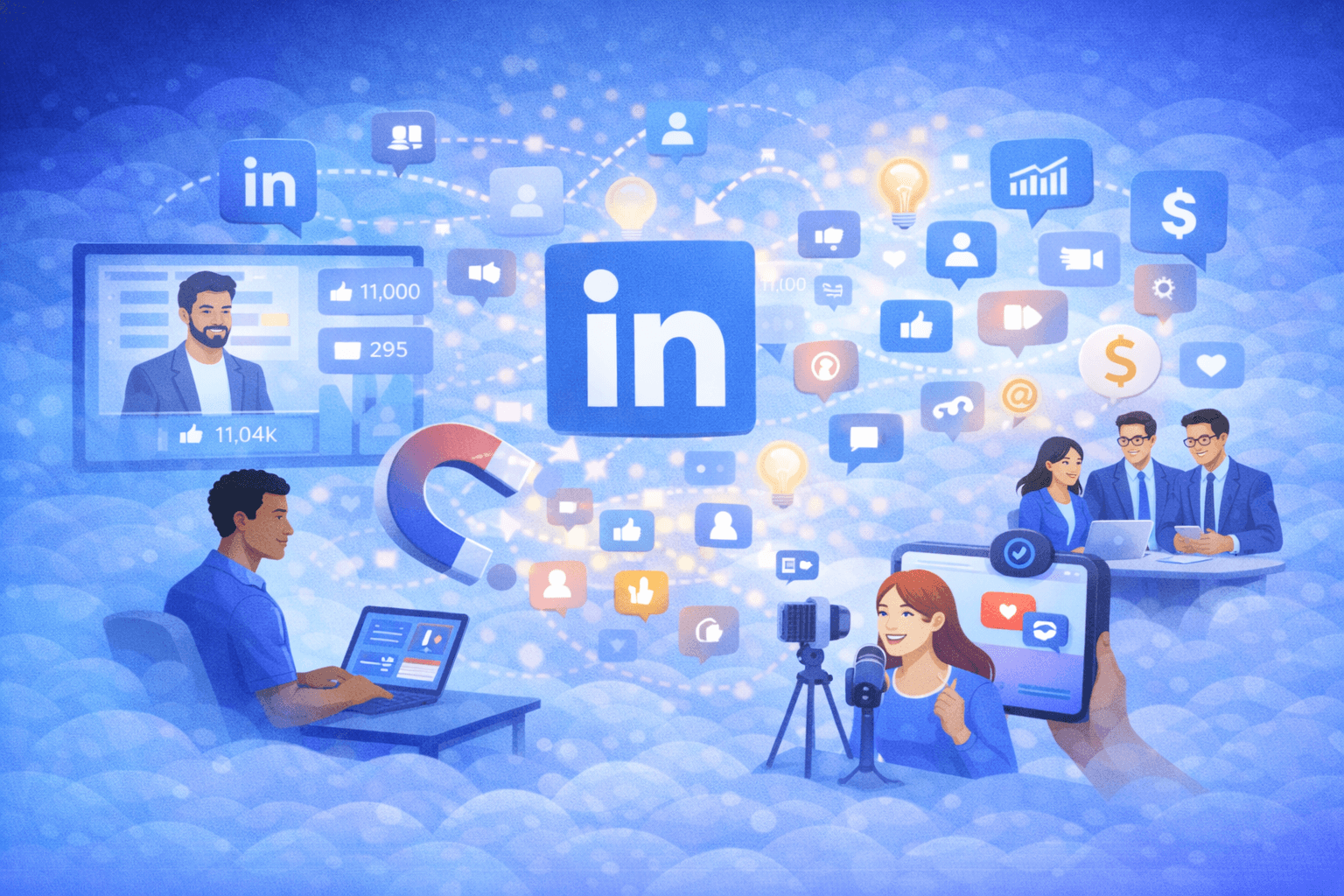
Why LinkedIn Is the Core Channel for B2B Creator Marketing
LinkedIn has become the default home for B2B creator marketing because it is where professional identity, domain credibility, and buyer intent intersect in public. As the trust gap widens, buyers increasingly rely on practitioners and peer voices over brand claims, and LinkedIn’s distribution dynamics reward those human profiles far more than Company Pages. The result is a budget shift away from high-cost paid impressions and toward creator partnerships that combine reach with credibility, helping brands break through ad fatigue with content that feels like education, not promotion. This guide explains what separates modern B2B creators from traditional influencers, which LinkedIn formats are driving the strongest engagement right now, and how to build a repeatable sourcing motion in niche categories. You will learn how to identify and vet real experts, structure outreach that earns replies, and write creative briefs that protect authenticity while staying on-message. Finally, it outlines how to choose the right tech stack, including Limelight’s advantages versus generalist platforms, and how to prove B2B influencer ROI with pipeline attribution and a clear 3 to 6 month path from pilot to profitability.
Feb 16, 2026
10 min read
Where B2B Decisions Are Made: The Rise of the LinkedIn Creator Ecosystem
B2B buying is evolving in a way most attribution models still cannot see: decisions are forming inside LinkedIn creator ecosystems long before a buyer ever visits a website or books a demo. In 2026, the “Dark Funnel” is where mental shortlists are built through feeds, comment threads, DMs, and peer recommendations that leave little to no trackable trail, but strongly shape Day 1 vendor selection. As trust shifts away from corporate brand pages and toward credible individuals, creator-led distribution is becoming one of the most efficient ways to build familiarity, authority, and confidence at the moment buyers are trying to reduce risk. This guide outlines how to navigate that evolution with a B2B strategy, not consumer influencer marketing. It explains how to distinguish true subject matter experts from broad-reach influencers, how to partner without sounding salesy, and how to structure an always-on creator program that compounds over time. It also covers what to measure beyond vanity metrics, how to connect creator activity to influenced pipeline and dark social signals, and why specialized platforms like Limelight outperform generalist tools when the goal is scalable, ROI-driven creator partnerships.
Feb 13, 2026
11 min read
Signal-Based Selling: How Revenue Teams Use Social Signals to Prioritize Outreach in 2026
Outbound Sales is getting very crowded. Too crowded. Now, the teams that win are not the ones with the biggest lists. They have the best timing. That is the core shift behind signal-based selling: a revenue motion built around real buyer behavior, not static account lists and quarterly guesses. This playbook outlines how modern revenue teams capture social intent data, translate dark social tracking into actionable sales plays, and build an always-on workflow that helps SDRs and AEs prioritize outreach based on current activity.
Feb 12, 2026
10 min read
Why Social Signals Are the Next Generation of Intent Data: A B2B Guide
Traditional B2B intent data is getting noisier in 2026, not because buyers stopped researching, but because the signals have moved. Cookie loss, privacy pressure, and walled gardens have made web-based intent less complete and less trustworthy, while “page visits” still struggle to separate casual curiosity from real buying motion. At the same time, more of the decision journey now happens in places traditional trackers cannot see, including LinkedIn threads, creator communities, and private sharing channels that show up as direct traffic or not at all. That is why social signals are becoming the next generation of intent data. Social engagement captures what web intent often misses: active participation, real-time context, and person-level readiness, like the questions buyers ask, the comparisons they debate, and the colleagues they pull into the conversation. This guide breaks down the highest-intent LinkedIn behaviors, explains dark social and privacy-compliant tracking, and shows how to turn engagement into effective outreach without being creepy, plus how creator partnerships can generate unique intent signals and measurable ROI using platforms like Limelight Vantage.
Feb 11, 2026
11 min read
The New Era of B2B Growth: Why Social Trust is Your Best Prospecting Asset
In 2026, the most valuable real estate for any tech brand isn't a crowded email inbox or a Google search result—it's the LinkedIn feed of a trusted peer. As traditional outbound channels face increasing fatigue and buyers grow skeptical of conventional marketing, companies are undergoing a fundamental shift in how they generate demand. The future of B2B growth lies at the intersection of two powerful forces: creator-led visibility and AI-powered prospecting. At Limelight, we've built the first B2B creator advertising platform to help brands break through the noise by connecting them with industry thought leaders. But activating influential voices is only half the equation. The other half is ensuring your internal operations are sophisticated enough to convert that attention into revenue.
Feb 11, 2026
7 min read
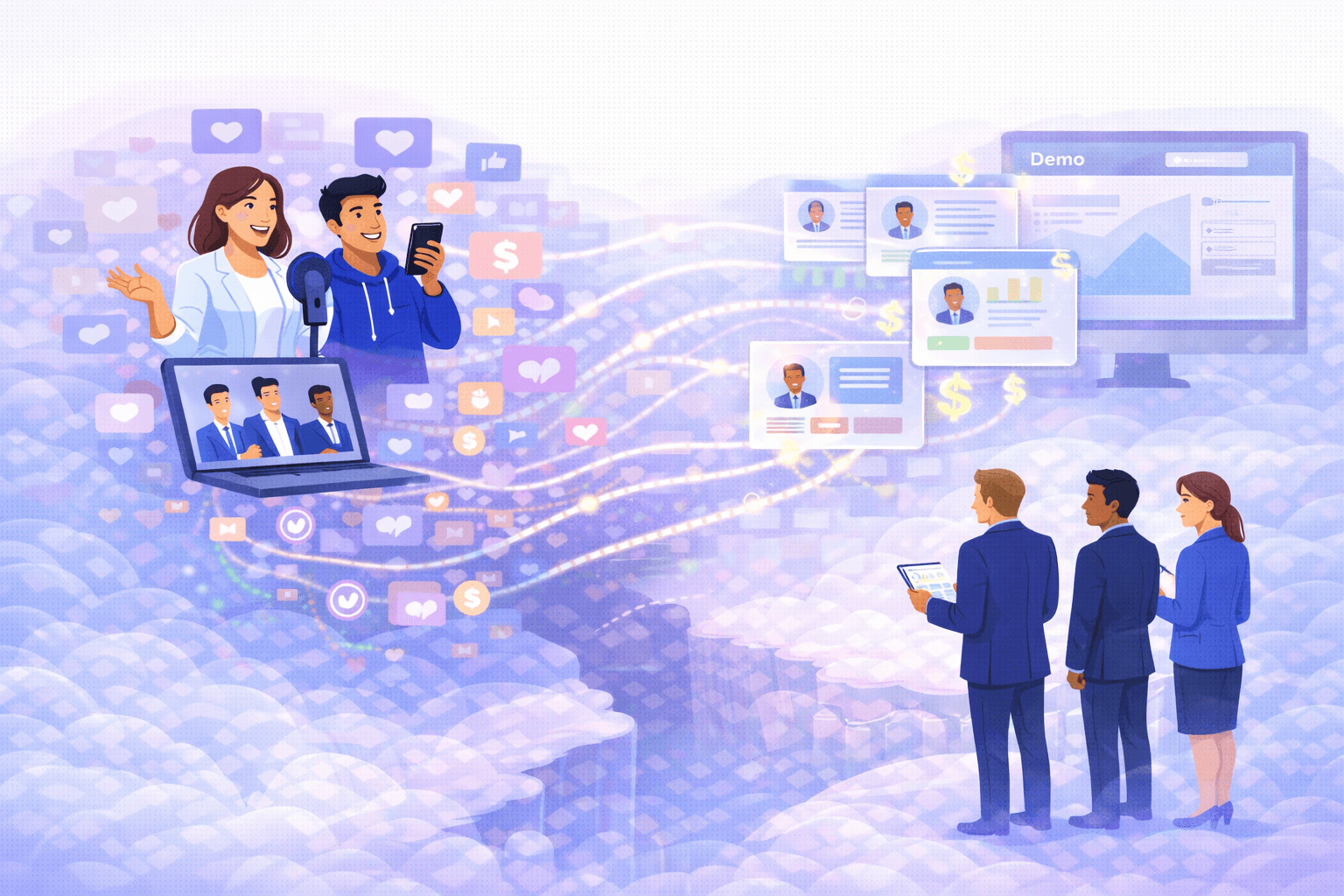
Beyond Your Website: How Social Signals Reveal True Buying Intent Before a Demo
B2B buyers are no longer leaving their strongest intent trails on your website. In 2026, the most reliable “digital body language” shows up in social-first spaces: LinkedIn comment threads, creator-led conversations, DMs, and peer communities where prospects openly debate tradeoffs, ask implementation questions, and tag teammates to build consensus. These social buying signals are leading indicators of demand, while website visits are often late-stage confirmation, fragmented by remote work, mobile browsing, and messy identity resolution. The result is a growing gap between what revenue teams can track in GA4 and where buying decisions actually form in Dark Social. This piece breaks down how to separate curiosity from true intent by spotting high-value behaviors, understanding why buyers engage more honestly with industry experts than corporate brands, and turning signal discovery into an SDR motion that feels helpful, not creepy. It also explains how creator partnerships act as catalysts that surface hidden demand, and why purpose-built B2B creator platforms outperform generalist influencer tools when the goal is account mapping, CRM workflows, and measurable pipeline impact. If your outbound performance is declining and your intent data feels noisier every quarter, this framework shows how to operationalize social signals into a Q1 pilot that drives real revenue.
Feb 10, 2026
11 min read
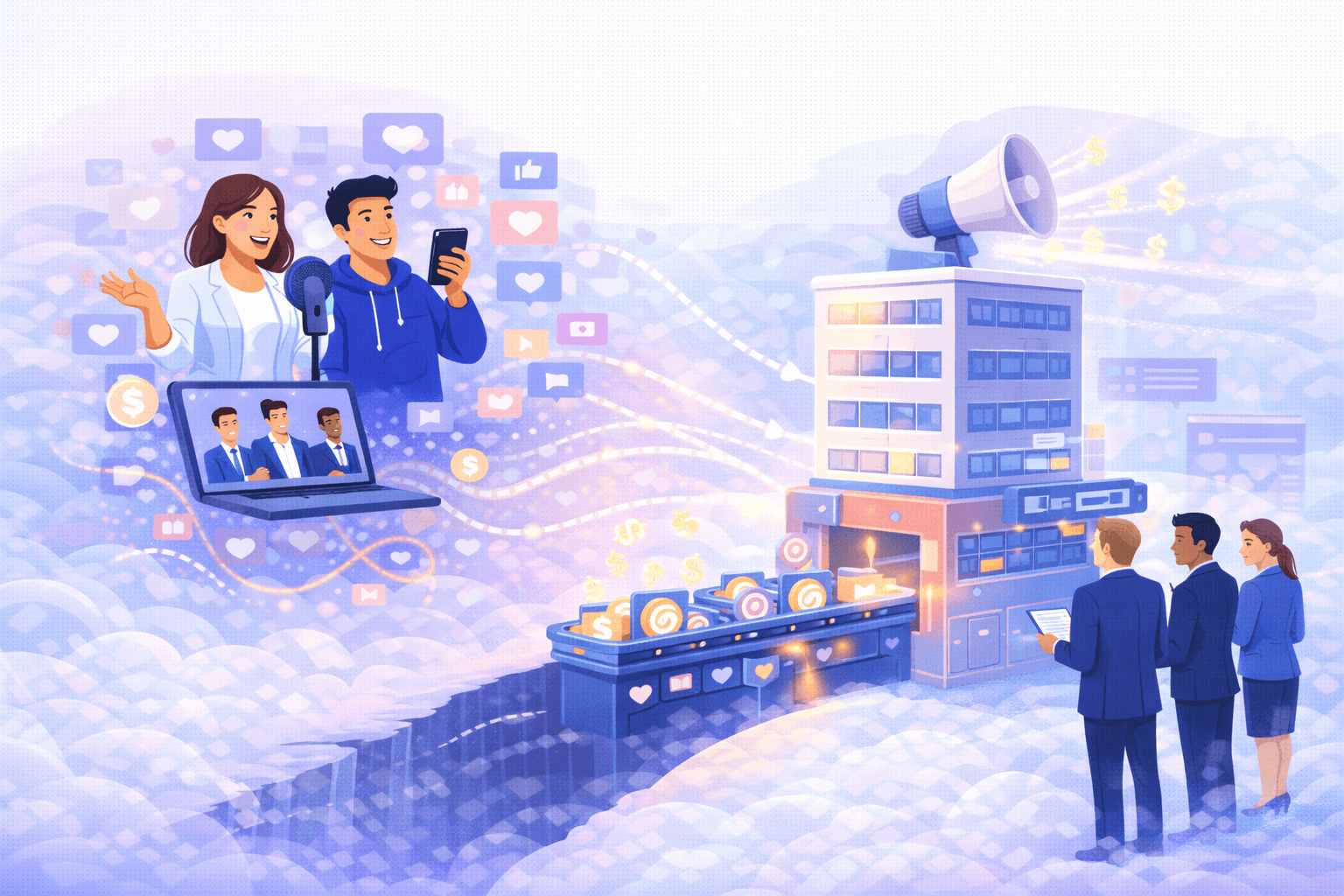
Stop Renting Attention: Build a Creator-Led Demand Engine In-House
B2B creator partnerships are no longer a side experiment or an agency-run campaign line item. In this playbook, Limelight breaks down why high-performing demand teams are bringing creator-led demand operations in-house: the economics are stronger than paid social, the feedback loops are faster than outsourced workflows, and the upside compounds when brands own the creator relationship. We dive into how to find “silent” technical creators already using your product, how to vet for genuine subject-matter expertise, and how to structure a creator ops function that scales without chaos. The article lays out the most common operational bottlenecks, the workflows that make co-creation easy for busy experts, and the measurement stack that ties creator activity to revenue outcomes. Finally, we cover the tech tipping point for graduating from spreadsheets and compares general marketplaces like Upfluence with specialized B2B platforms, showing why purpose-built tools like Limelight win when you need precision discovery, streamlined operations, and ROI you can defend.
Feb 9, 2026
10 min read
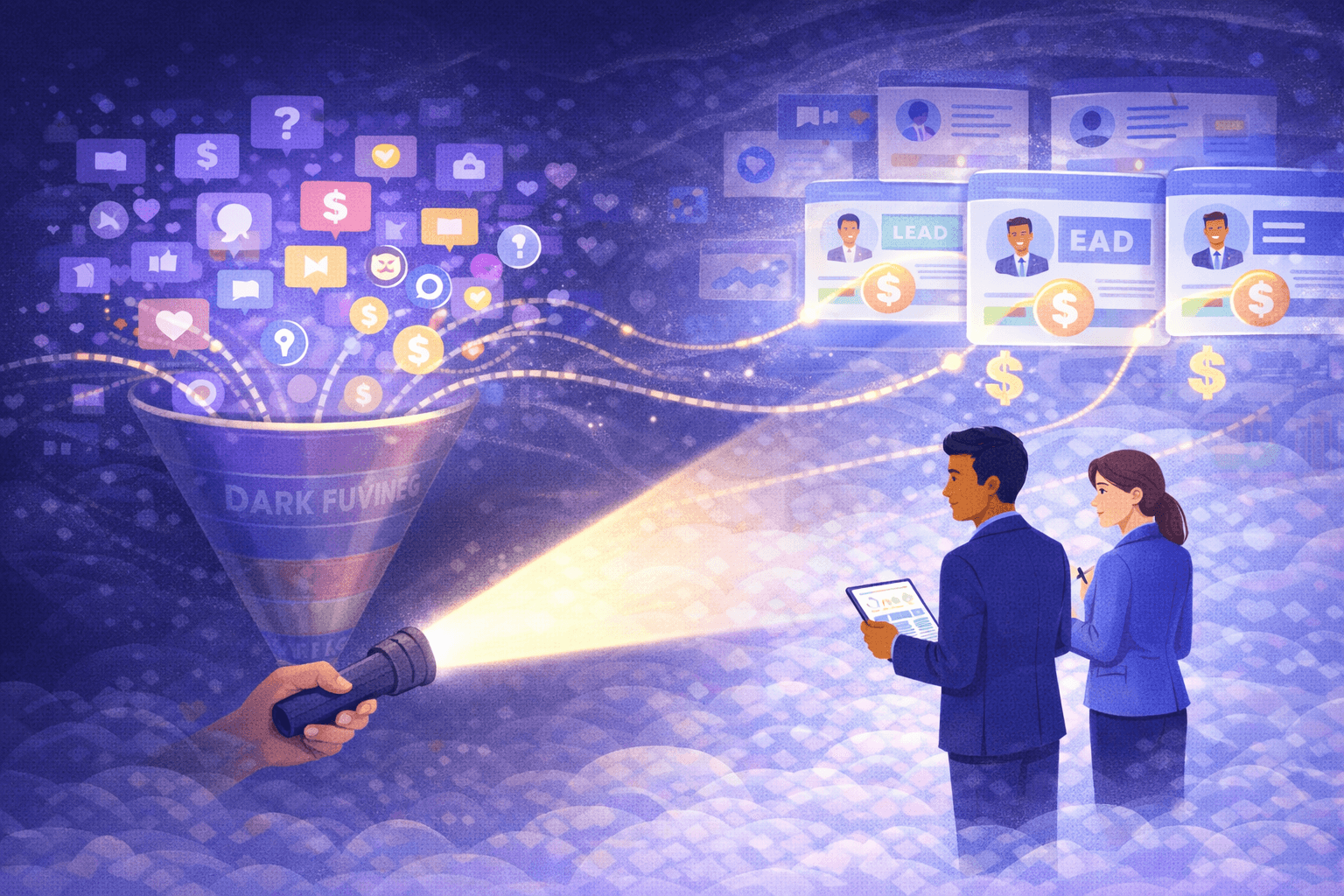
How to Capture Buying Intent in the Dark Funnel
The strongest B2B buying intent often shows up long before a prospect ever hits your website. As cookies fade and attribution gets messier, more of the buyer journey is happening in the Dark Funnel: creator comment threads, private DMs, peer-to-peer shares, and quiet internal discussions that traditional analytics never capture. This change makes B2B social engagement signals the new intent data. Not views or likes, but effort-based actions like saves, shares to colleagues, integration questions, and detailed feature debates that reveal real evaluation behavior in real time. We break down how to separate vanity metrics from genuine intent, why creators and founder-led content generate higher-trust signals than corporate pages, and how to interpret comments and DMs ethically without turning engagement into surveillance. You will also learn how to map individual engagement back to target accounts, operationalize signals inside your CRM and ABM workflows, and build a repeatable creator-led signal strategy that produces measurable pipeline impact.
Feb 6, 2026
10 min read
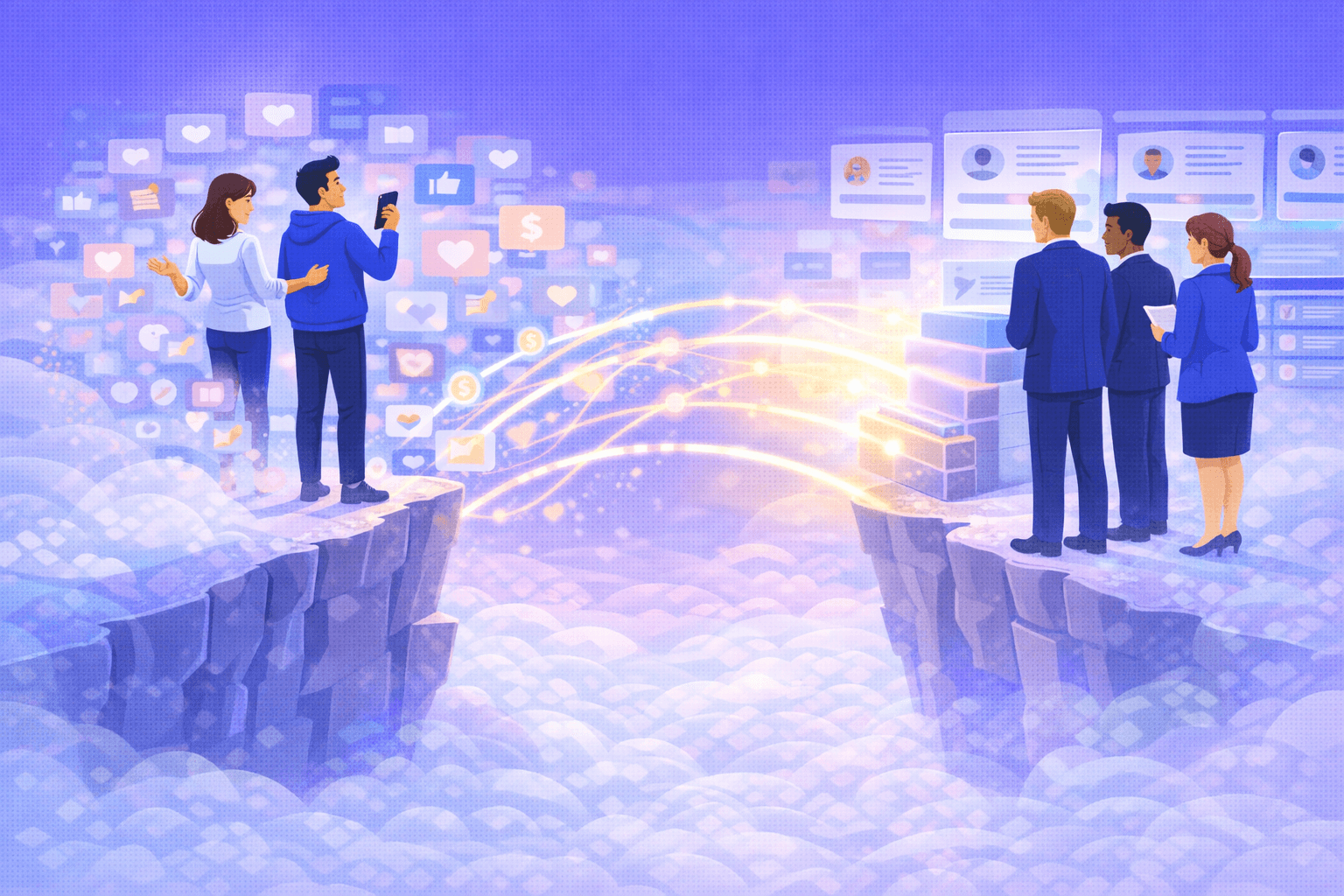
The Buyer-Signal Gap in B2B Influencer Marketing: How Revenue Teams Can Finally Close It
B2B influencer marketing is a winning budget, but most revenue teams still cannot answer the only question that matters: what did it do for the pipeline? That disconnect is the Buyer-Signal Gap, the space between social engagement metrics and the revenue reality inside your CRM. Likes and impressions might signal attention, but B2B buying decisions form in dark social channels like Slack, DMs, and internal threads where standard tracking breaks down, which means high-intent behaviors never get captured, scored, or routed into sales motion. The result is predictable: teams over-invest in content that looks successful in-platform while under-investing in creator content that actually drives evaluation, shortlist decisions, and closed-won outcomes. This article lays out how to close that gap by shifting from vanity metrics to signal-based marketing, a practical approach that focuses on intent behaviors such as repeat consumption, saves, shares, profile actions, and evaluation-heavy comments. It explains how to map creator touchpoints to pipeline stages, what revenue attribution capabilities to demand from modern influencer platforms, and why generalist tools often fall short for complex B2B journeys. It also breaks down how Limelight helps teams operationalize B2B creator partnerships at scale while capturing buyer signals and turning them into revenue-ready outputs, so influencer marketing stops being “awareness” and starts becoming a measurable pipeline engine.
Feb 5, 2026
10 min read
Why Creator "No’s" Reveal More About Your GTM Than Your Budget
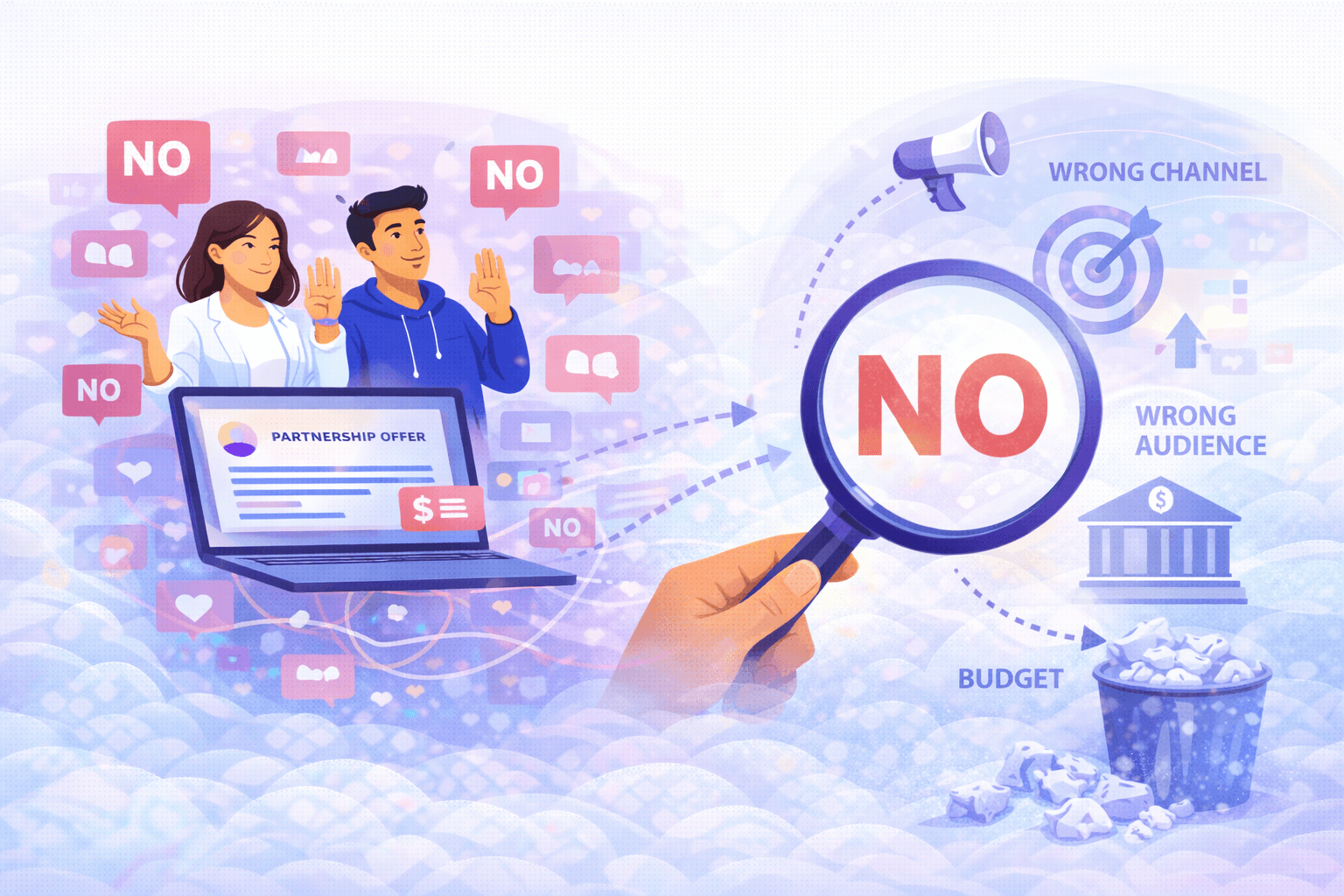
Creator rejection is not a sourcing inconvenience, it is a GTM signal. When credible B2B creators decline partnerships even with strong budgets, it usually has less to do with price and more to do with trust, fit, and risk. Top-tier creators treat audience credibility as a finite asset, and a single misaligned sponsorship can damage their authority with the exact practitioners and decision-makers brands are trying to reach. That is why the pay-for-post model is breaking down in B2B: creators are optimizing for long-term reputation, not short-term payouts, and they can spot vague positioning, thin proof, or category fatigue faster than most teams can. This piece shows how to treat "no" as diagnostic data and use it to tighten your messaging, targeting, and partnership strategy. It breaks down the non-financial drivers behind rejection, explains how to distinguish bad outreach from deeper product-market fit issues, and offers a practical framework for building an Ideal Creator Profile that improves acceptance rates. It also compares general influencer marketplaces with dedicated B2B platforms, including Limelight vs Upfluence and Limelight vs Thinkers360, and closes with the metrics that matter when alignment is the strategy: acceptance rate, time-to-activation, pipeline influence, and GTM efficiency, plus what the shift from renting audiences to building partnerships will look like in 2027.
Feb 4, 2026
10 min read
From Content to Pipeline: Mastering the Social GTM Funnel
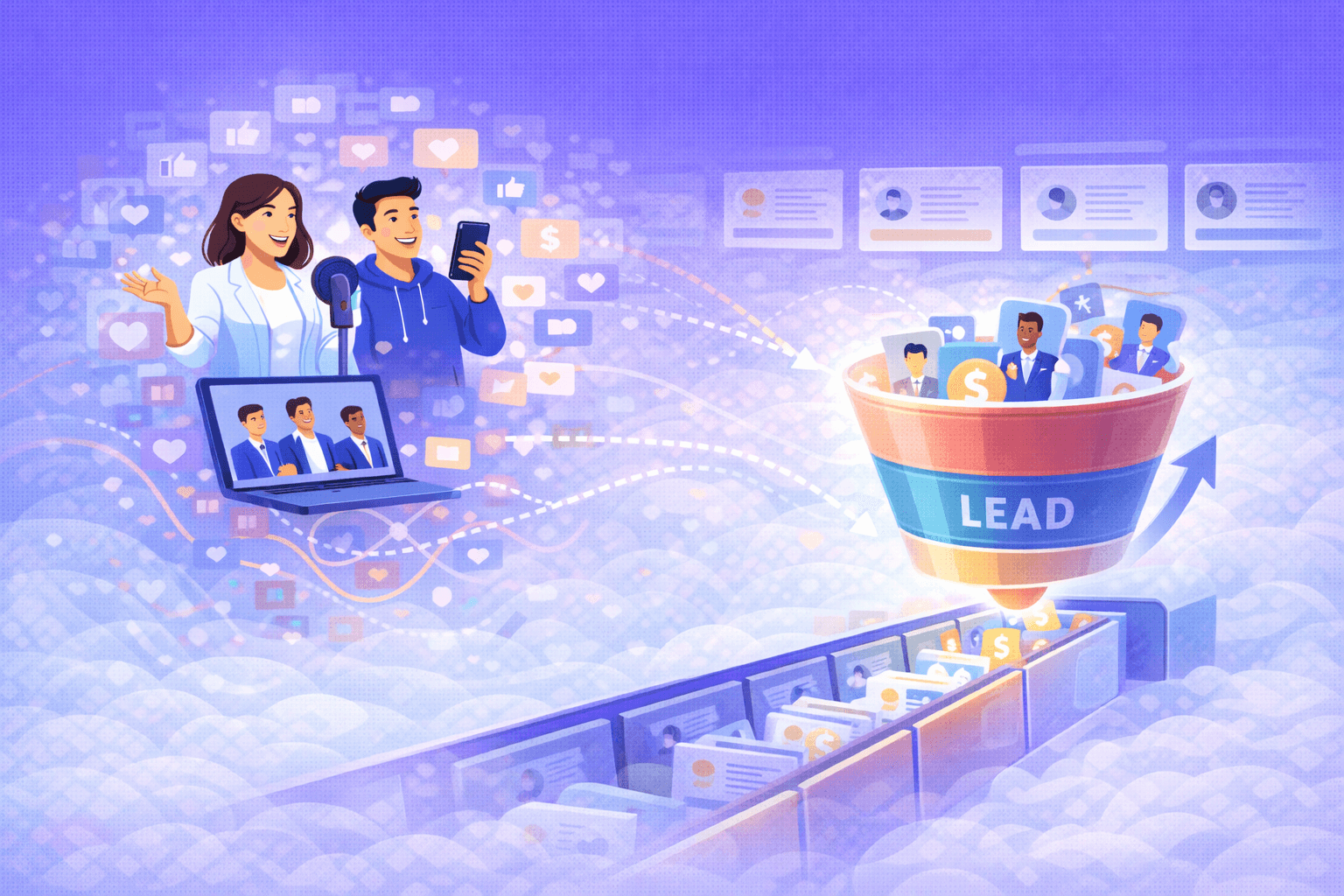
The Social GTM Funnel is a go-to-market system that converts social credibility into pipeline by using trusted voices (internal experts and external creators) to shape buyer preference before buyers ever fill out a form. Traditional B2B lead generation was built for a world where attention was captured through interruption and measured through form fills: run ads, gate a report, collect emails, hand leads to SDRs, and hope volume creates revenue. It worked when buyers had fewer choices, fewer channels, and fewer ways to validate claims. Now, that model breaks for a simple reason: buyers do not want to be “captured.” They want to be convinced.
Feb 3, 2026
10 min read
Why Social GTM Is Replacing Cold Outbound for B2B
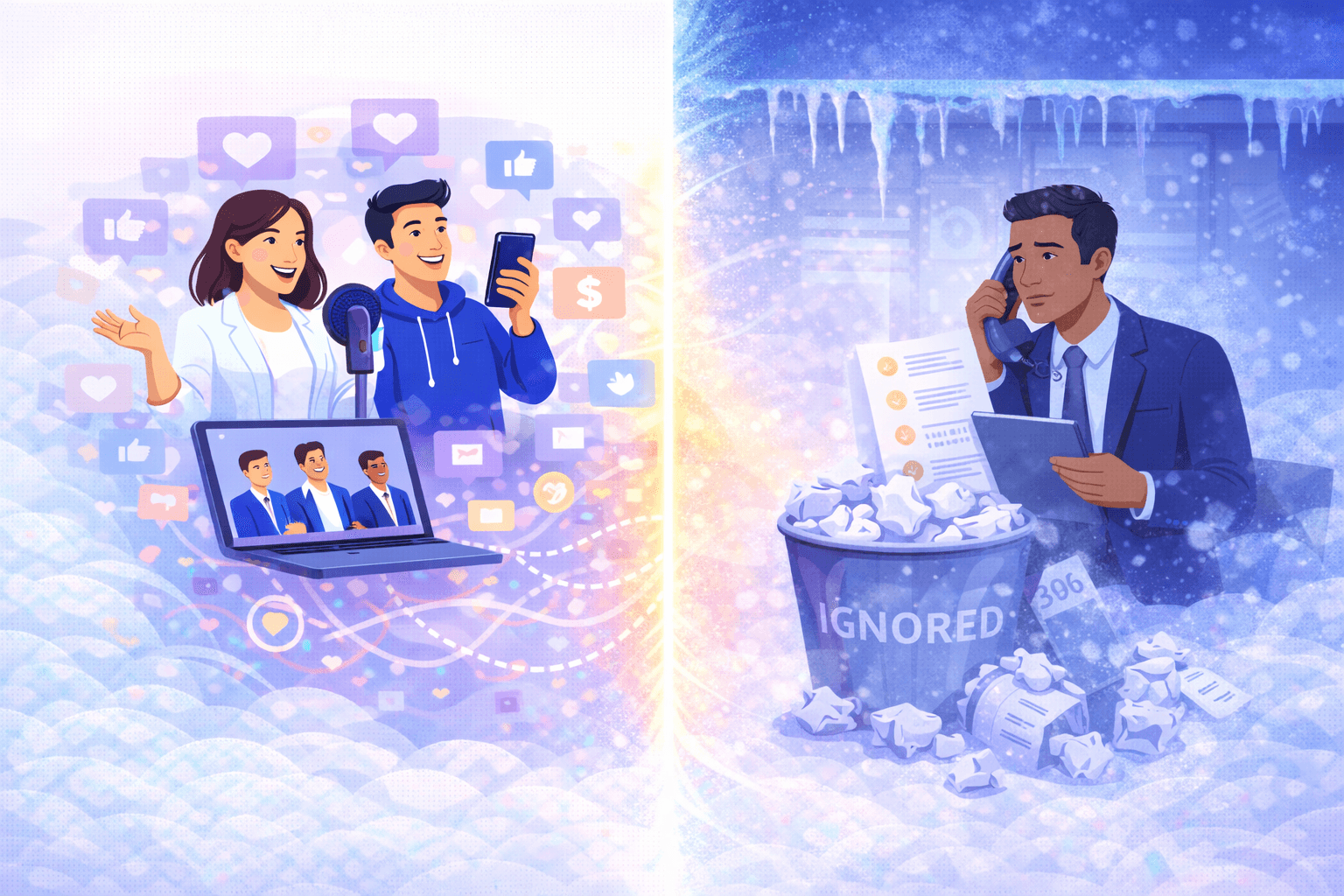
If you are running B2B growth in 2026, you have noticed that cold outbound is not “getting harder.” It is getting structurally worse. Email deliverability keeps tightening, LinkedIn inboxes are saturated, and every buyer has learned the same defensive reflex: ignore anything that smells like a pitch. Meanwhile, the companies still winning pipeline are not “better at cold call scripts.” They are better at trust. They show up in the places buyers already gather, with the people buyers already believe. That is the change from company-led distribution to people-led credibility.
Feb 2, 2026
9 min read
Why the Best Outreach Starts Before Sales Gets Involved
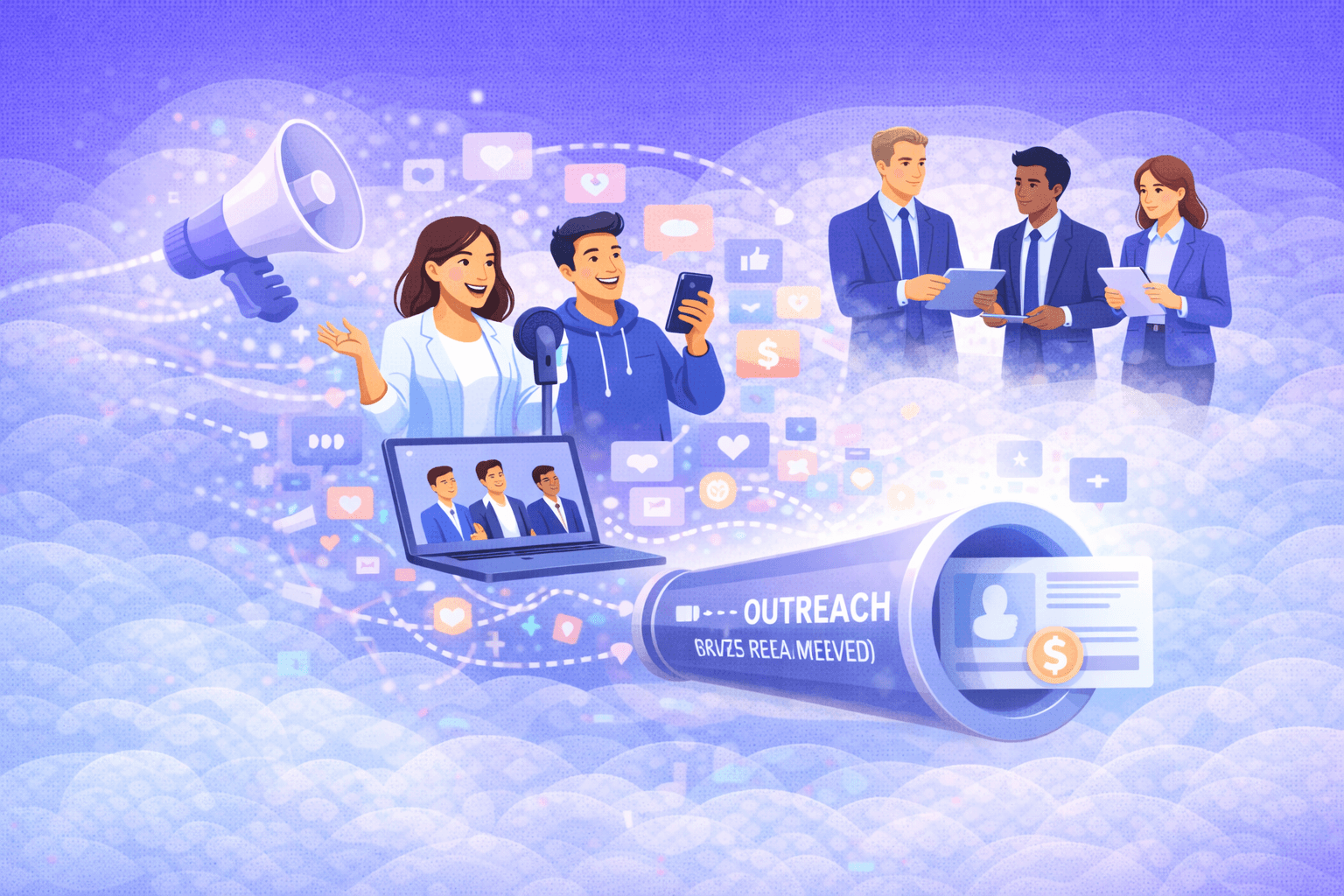
The traditional B2B sales playbook is breaking down, and most teams can feel it in the numbers. It is not that selling got harder overnight. It is that buying changed quietly, then all at once. Buyers now show up to the first call with context, opinions, and a short list. If your brand is not already “known” in their mental market, you are negotiating from behind. That is why the best outreach starts before sales gets involved. Not because sales is less important, but because trust is the prerequisite to attention, and attention is the prerequisite to pipeline.
Jan 30, 2026
10 min read
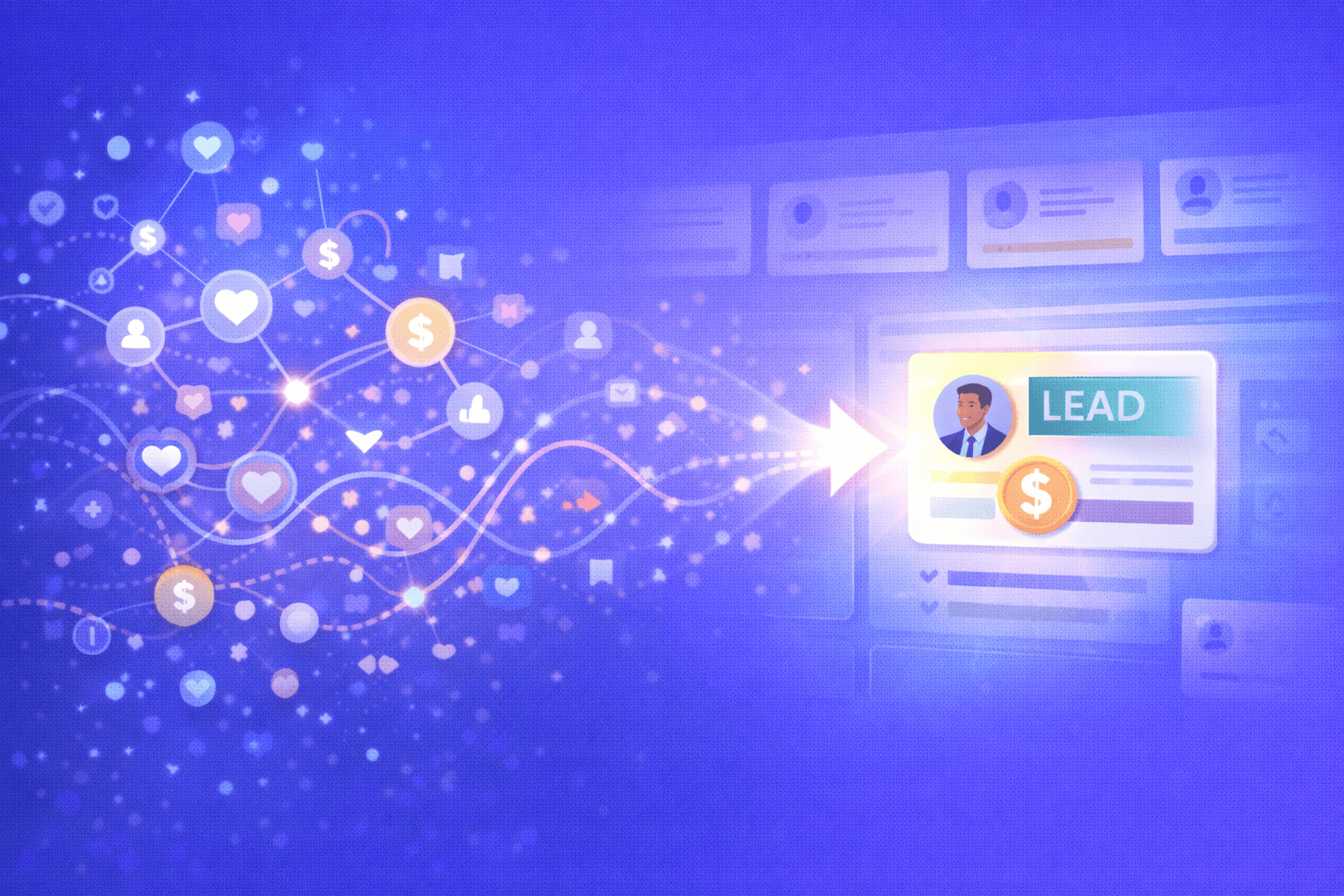
Turning Social Engagement Into Sales-Ready Leads
In 2026, B2B teams do not have a social media problem, they have a signal problem. This playbook breaks down how to stop treating likes and impressions as success metrics and start turning real engagement into identified, sales-ready leads. You will learn how dark social creates invisible buyer intent, how Social Listening Agents can de-anonymize and enrich engagement into contact and account data, and how to route those signals directly into Salesforce or HubSpot with outreach that converts without feeling creepy. If you want social to produce meetings, pipeline, and revenue you can attribute, this is the operating model.
Jan 29, 2026
9 min read

The Signal Advantage: Why B2B Growth Teams Win by Listening Earlier
B2B creator marketing is moving away from “more influence” and heading towards “more direction” Vectorizing Trust is the practice of turning creator-driven credibility into a measurable signal with both (1) magnitude (how much trust is being transferred) and (2) direction (which pain point, category, or solution that trust is accelerating toward). In other words, trust is not just something you earn. It is something that moves. That matters because high engagement is no longer a reliable predictor of revenue. Engagement is easy to buy, easy to fake, and increasingly disconnected from the behavioral changes that actually create pipeline. The teams that win treat creator programs like sensing infrastructure. They track what is moving in the market before buyers announce intent. This is also where most go-to-market motion breaks: The Late-Signal Problem is what happens when GTM teams only detect demand after the decision is already framed. The shortlist is already set, and “intent” is simply the buyer looking for validation of a path they have mostly chosen. Vectorizing trust is how you get earlier than that.
Jan 28, 2026
8 min read

The 2026 B2B Buyer Journey: How Social Content and Creators Bridge the Trust Gap
B2B trust is built less by brand claims and more by repeated, consistent third-party validation across social and dark social. The primary job of social content is reducing buyer uncertainty, not broadcasting features. Content formats map cleanly to complex sales cycles: short-form video for awareness, LinkedIn thought leadership for consideration, and co-created deep dives for decisions. Creator-Market Fit is the north star: borrow credibility from verified practitioners whose audience matches your ICP. Limelight operationalizes B2B creator partnerships with verified creator discovery, scalable activations, and ROI measurement workflows built for B2B.
Jan 27, 2026
11 min read
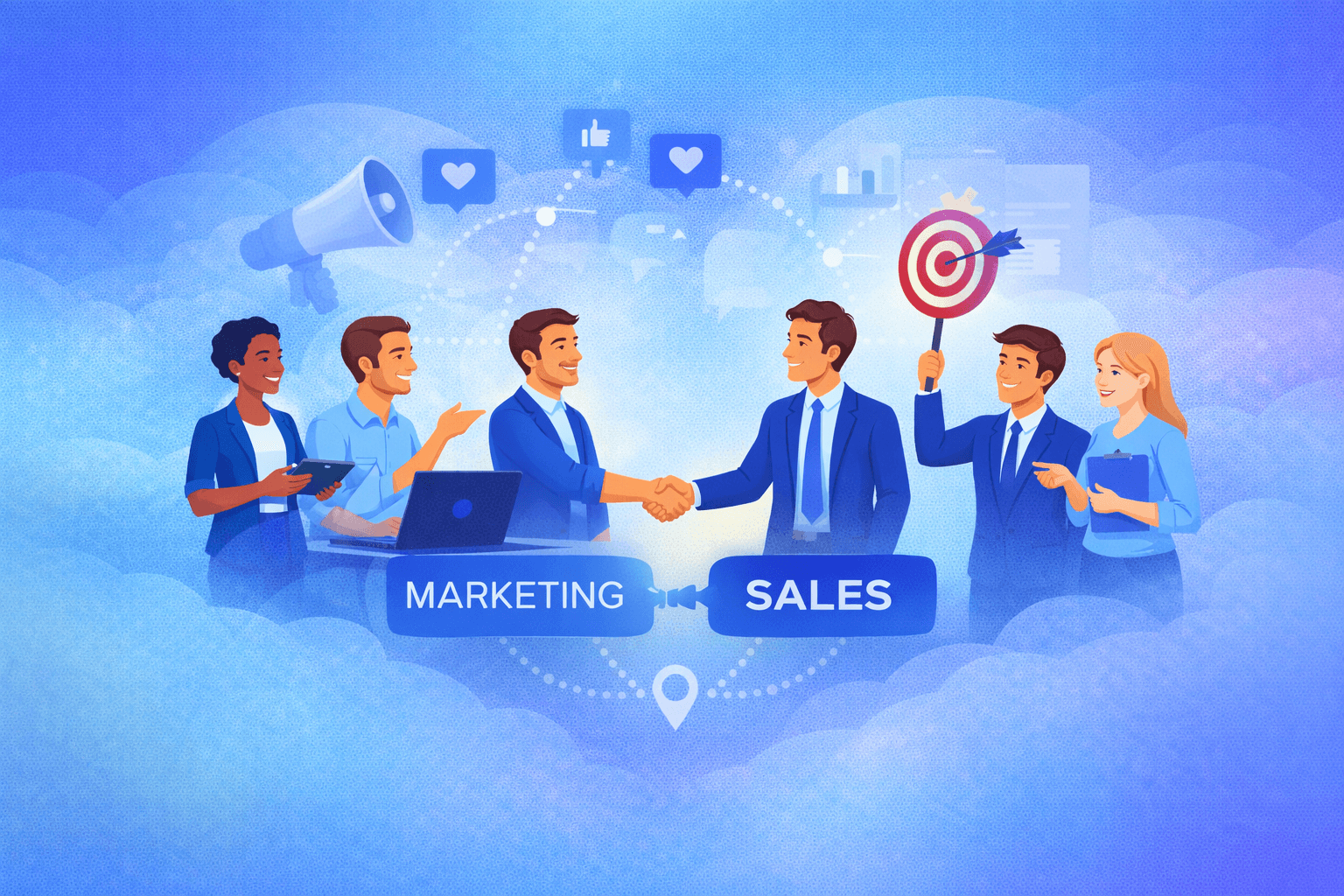
Breaking Silos: How Marketing and Sales Win Together With Social GTM
This article breaks down how to make that shift real: how to align campaigns and prospecting, how to influence Dark Social conversations, how to package creator content into sales enablement, how to measure what matters, and how to pick the platform that supports a unified GTM motion.
Jan 25, 2026
12 min read
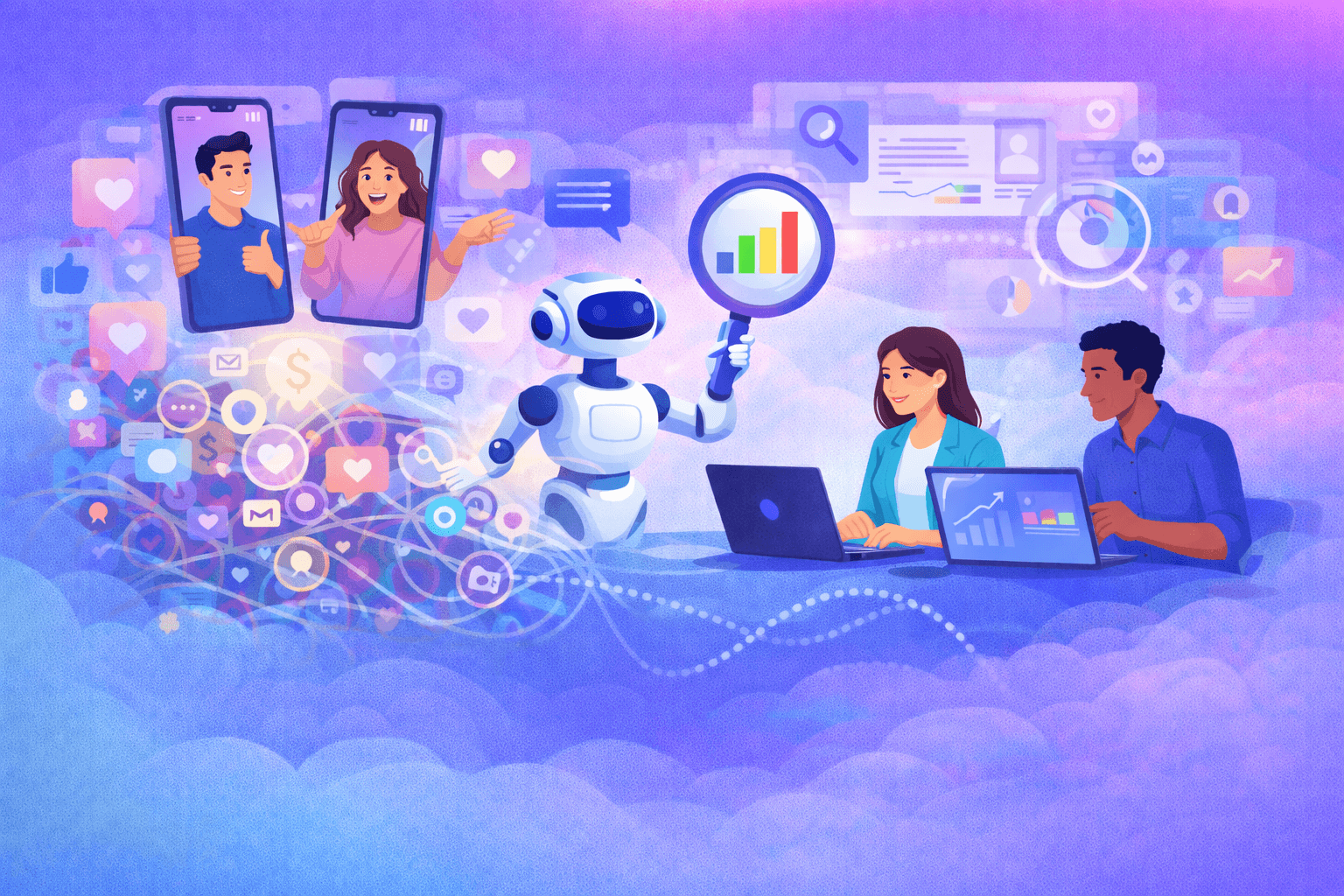
From Influencer Noise to Revenue Signal: The AI Systems B2B Creators Use to Surface Buyer Intent
In 2026, “creator marketing” is no longer a brand play sitting beside demand gen. For high-growth B2B teams, it is becoming a new sensor network for buyer intent. Most buying conversations start in public and semi-public channels (LinkedIn threads, comments, reposts, DMs, Slack communities, podcasts, webinars). But most revenue teams still operate as if intent only exists when someone fills out a form. That gap creates GTM latency, and it is why sales feels like it is always arriving after decisions have already been made. AI is supposed to fix this. Not by generating more content, but by turning creator engagement into structured data your revenue system can act on. This article lays out the real problem AI must solve for B2B creators, introduces a practical framework called the Creator Signal Stack, explains why “free AI tools” miss the point, and shows how teams move from influencer programs to GTM infrastructure. We’ll also unpack Limelight’s approach to this problem and clarify how it differs from platforms like Upfluence.
Jan 23, 2026
10 min read

Why Creator Partnerships Are Outperforming Traditional B2B Marketing Channels in 2026
B2B marketing in 2026 is shifting away from corporate-first distribution because paid channels are getting noisier, more expensive, and less trusted. Buyers are making decisions in private networks where pixels cannot follow, and they are leaning on practitioner voices to filter options, validate claims, and build confidence. That combination creates a Trust Deficit for brand advertising, while creator-led insights travel naturally through Dark Social where real consensus forms. The strategy now centers on B2B creator partnerships that deliver education-first content, outperform gated white papers, and win through Psychographic Targeting instead of job-title targeting. The approach also requires clear guardrails for brand safety, a preference for long-term partnerships over one-off posts, and systems that make creator discovery, booking, and measurement repeatable, with signals that connect creator activity to pipeline and revenue.
Jan 22, 2026
12 min read
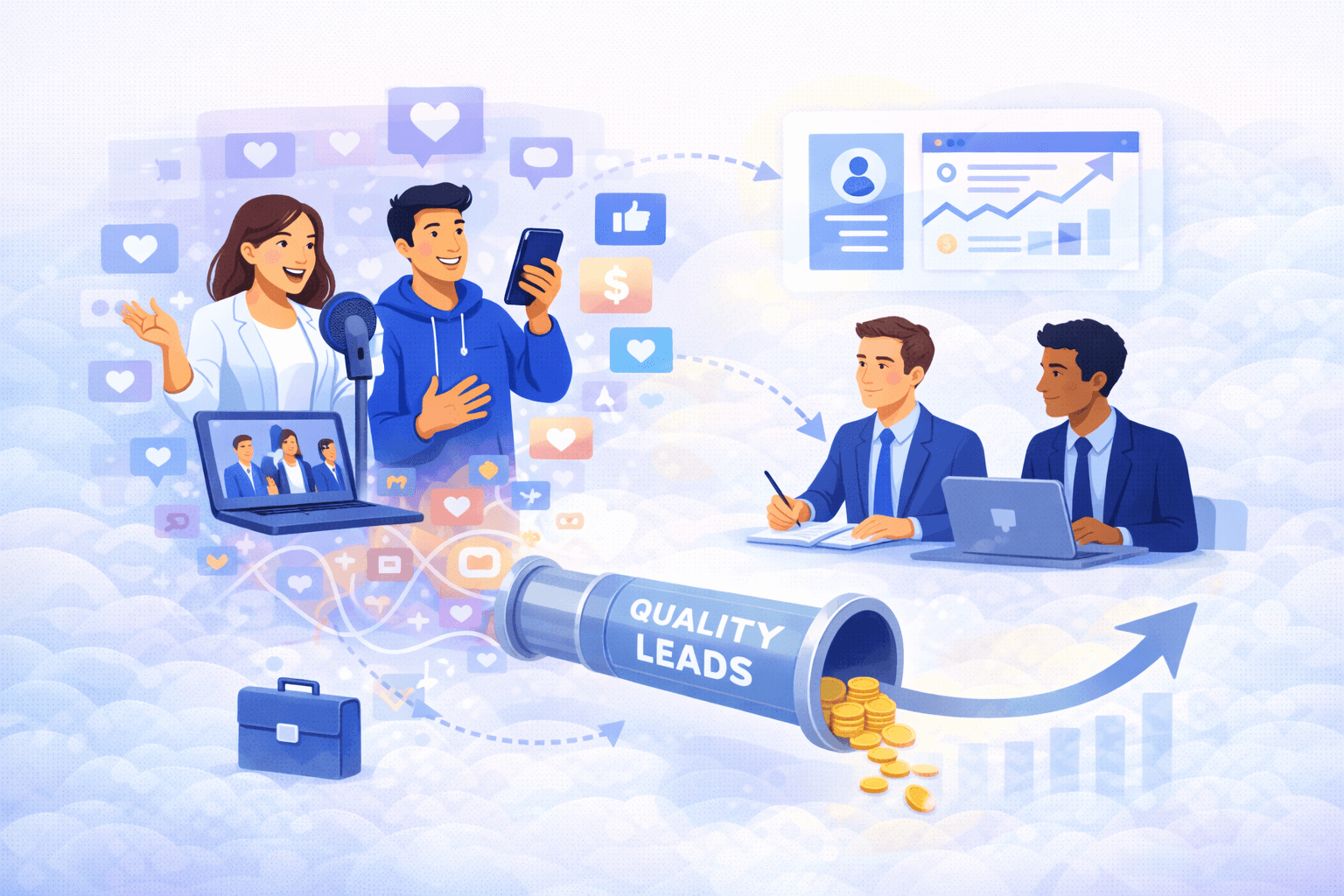
Moving Beyond Vanity: How B2B Brands Use Creators to Drive Pipeline
For years, brands treated creators like a distribution hack: pay for a post, measure impressions, move on. That worked when paid social was cheap, cookies stitched journeys together, and buyers clicked before they bought. Today, the most valuable outcomes happen off-link: in Slack communities, group chats, comment threads, private DMs, and “heard about you from…” conversations that never show up in a UTM report. This is why serious B2B teams are moving beyond vanity. They are building creator programs designed to create sales conversations, accelerate trust, and produce measurable pipeline. Not just awareness.
Jan 21, 2026
8 min read
What Makes a High-Impact B2B Creator in 2026: The Definitive Guide for Growth Leaders
In 2026, a High-Impact B2B Creator is not defined by follower count. They are defined by the ability to shape buying decisions in a specific market through credible, practitioner-led content that creates trust, clarifies complexity, and drives measurable action. As B2B channels get noisier and AI-generated content gets cheaper, expertise has become the scarce asset. That is why the B2B Creator Economy is shifting away from broad influence and toward verified domain authority. Definition: High-Impact B2B Creator (2026) A High-Impact B2B Creator is a verified subject matter expert who consistently earns peer-level engagement from a relevant audience, communicates complex ideas with clarity, and influences pipeline through trust, not hype. The rest of this guide breaks down how trust shifted, which formats are winning on LinkedIn, how to vet real influence, how to collaborate without breaking the creator’s voice, and how to measure B2B Influencer ROI with CFO-ready metrics. If you want to scale a program without scaling chaos, we also cover why a B2B-first Creator Partnership Platform like Limelight changes the workflow entirely.
Jan 20, 2026
10 min read

The Definitive Guide to B2B Creator Partnerships: Scaling Trust in 2026
A definitive 2026 playbook for scaling B2B growth through creator partnerships. Learn how to find and vet credible thought leaders, choose formats that convert, structure long-term deals, and measure ROI beyond vanity metrics, plus a 90-day launch roadmap and a Limelight vs Upfluence comparison to help you build trust at scale.
Jan 19, 2026
8 min read

Why Most Influencer Pitches Fail — and How B2B Teams Get Responses That Turn Into Revenue
Most brands think influencer outreach is a messaging problem. It’s not. Creators don’t ignore pitches because the email subject line was weak or the DM was too short. They ignore them because the outreach signals nothing meaningful — no alignment, no relevance, no upside for their audience or their credibility. For B2B teams trying to use creators as a growth channel, response rates aren’t a vanity metric. They’re an early indicator of whether your go-to-market motion is grounded in reality or still operating on outdated influencer logic. This article reframes creator outreach from first principles — not as a persuasion exercise, but as a signal-matching problem — and lays out a system B2B revenue teams can actually scale.
Jan 12, 2026
8 min read

